

AI Agent Fragmentation: The Next Frontier
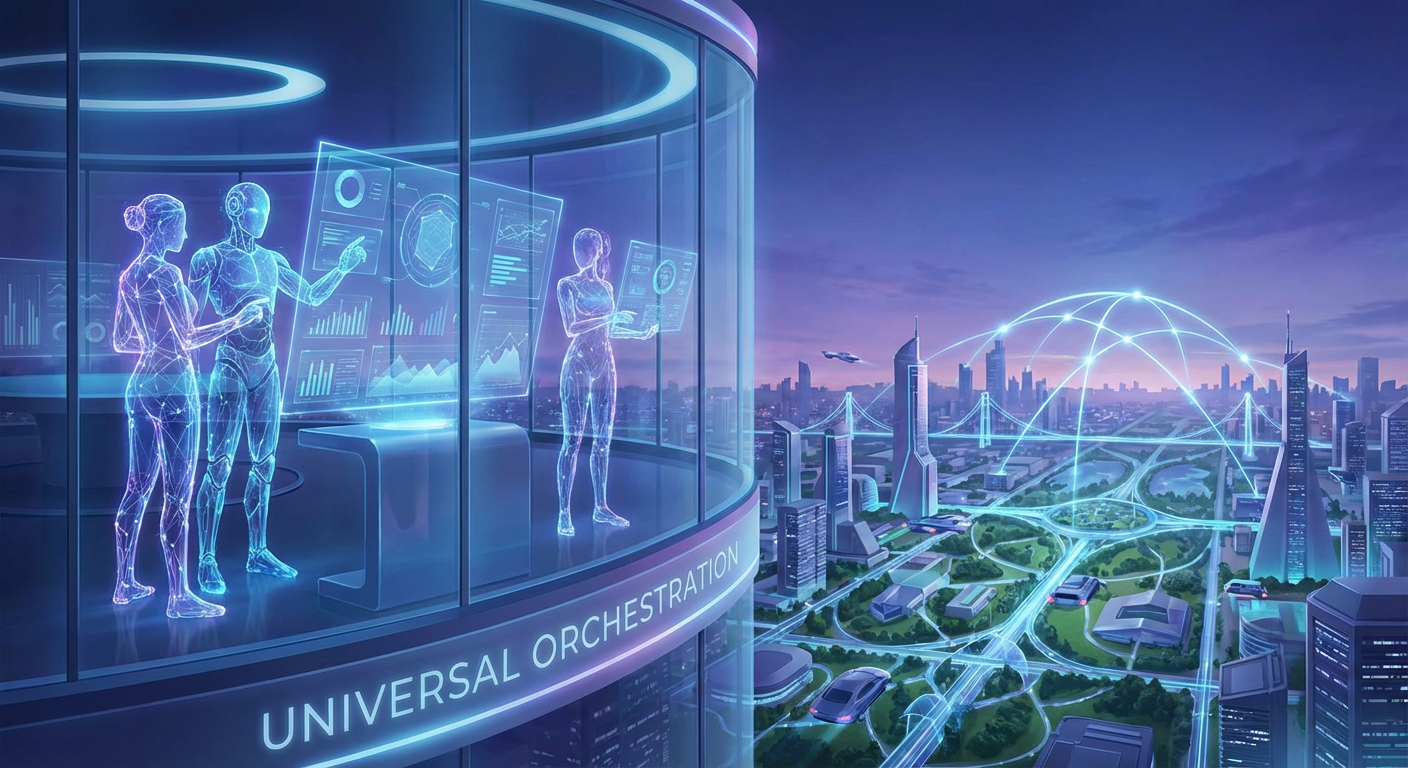
The recent debut of BAND's 'universal orchestrator' marks a significant turning point in the evolution of AI agents. For the past eighteen months, enterprises have been deploying autonomous agents to handle various tasks, from customer support to codebase refactoring. However, as these digital workers proliferate, the issue of fragmentation has emerged as a major challenge. Agents built on different platforms, such as LangChain and CrewAI, have no native way to coordinate with each other, leading to a lack of cohesion and efficiency.
Historical Context: The Rise of AI Agents
The concept of AI agents is not new, but the current wave of adoption can be traced back to 2020, when companies like Google and Microsoft began investing heavily in AI research and development. The introduction of transformer-based architectures, such as BERT and RoBERTa, marked a significant improvement in natural language processing capabilities, paving the way for the development of more sophisticated AI agents. Since then, the market has seen a proliferation of AI agent platforms, each with its own strengths and weaknesses. However, as the number of agents increases, so does the complexity of managing them, highlighting the need for a universal orchestrator.
Competitive Analysis: The Battle for Orchestration Supremacy
The debut of BAND's universal orchestrator is likely to disrupt the current market dynamics, with existing players like LangChain and CrewAI facing increased competition. These platforms will need to adapt quickly to remain relevant, either by developing their own orchestration capabilities or integrating with BAND's universal orchestrator. Meanwhile, new entrants like BAND will need to navigate the complex landscape of AI agent platforms, forging partnerships and establishing themselves as leaders in the orchestration space. As the market evolves, we can expect to see a period of intense competition, with companies vying for dominance in the orchestration landscape.
Technical Deep Dive: The Inner Workings of Universal Orchestration
So, how does BAND's universal orchestrator work? At its core, the platform utilizes a combination of APIs, messaging protocols, and data normalization techniques to enable seamless communication between AI agents built on different platforms. This allows agents to hand off tasks, share data, and coordinate their actions in a cohesive and efficient manner. The technical challenge lies in developing a system that can accommodate the diverse range of AI agent platforms, each with its own unique architecture and communication protocols. BAND's universal orchestrator addresses this challenge by providing a standardized interface for agents to interact with each other, effectively creating a common language for AI agents to communicate.
Second-Order Effects: The Future of AI Adoption
The debut of BAND's universal orchestrator has significant implications for the future of AI adoption. As the fragmentation issue is addressed, we can expect to see a surge in AI agent deployments, as companies become more confident in their ability to manage and coordinate their digital workers. This, in turn, will lead to increased demand for AI talent, as companies seek to develop and deploy more sophisticated AI agents. Furthermore, the rise of universal orchestration will enable the creation of more complex AI systems, comprising multiple agents working together to achieve a common goal. As the AI landscape continues to evolve, we can expect to see the emergence of new business models, such as AI-as-a-Service, where companies offer pre-trained AI agents and orchestration capabilities to clients.
Forward-Looking Predictions: The Rise of AI Orchestration
As we look to the future, it is clear that universal orchestration will play a critical role in the development of AI systems. Within the next two years, we can expect to see the market for AI orchestration platforms grow significantly, with BAND and other players competing for dominance. By 2025, AI orchestration will become a standard feature of AI agent platforms, with companies like LangChain and CrewAI integrating universal orchestration capabilities into their offerings. As the AI landscape continues to evolve, we can expect to see the emergence of new technologies, such as AI agent marketplaces, where companies can buy and sell pre-trained AI agents and orchestration capabilities. The future of AI is exciting, and the debut of BAND's universal orchestrator marks an important step towards realizing the full potential of AI agents.