

Amazon's Zoox Bets Purpose-Built Design Can Beat Waymo's Scale
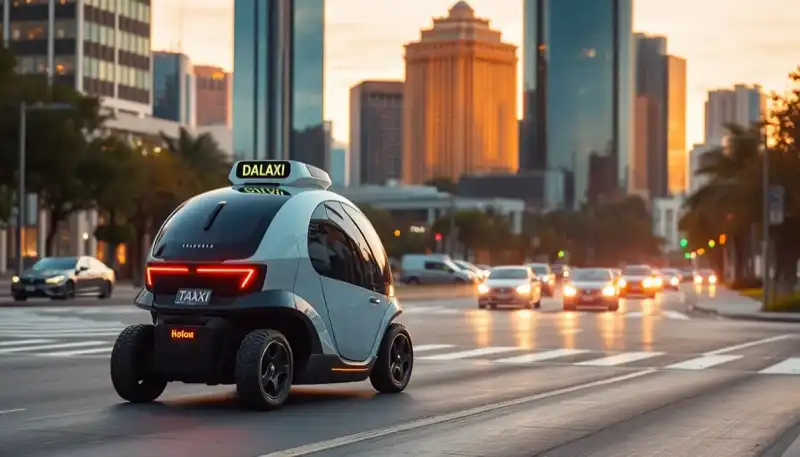
Amazon's self-driving subsidiary Zoox announced in March 2026 that it would begin robotaxi testing in Dallas and Phoenix, bringing its total US city count to ten. On the surface, this reads like another incremental expansion update from a company that has been testing autonomous vehicles since 2018. But zoom out and the picture gets far more interesting. Zoox is executing a fundamentally different strategy than every other player in the robotaxi race, and the Dallas and Phoenix deployments reveal exactly where those strategic bets are headed. The question is no longer whether autonomous ride-hailing will work. It is whether Amazon's vision of a ground-up redesigned vehicle can outcompete Waymo's retrofit-and-scale juggernaut before the market window closes.
The Long Road From Foster City to Ten Cities
To understand what Zoox is doing in 2026, you need to understand the arc that got them here. Founded in 2014 by Tim Kentley-Klay and Jesse Levinson, Zoox spent its first six years as an ambitious but capital-hungry startup with a radical thesis: the right way to build a robotaxi is to design the entire vehicle from scratch, not bolt sensors onto an existing car. Amazon acquired Zoox in June 2020 for $1.2 billion, a price that looked like a bargain bet on autonomous driving at a time when the technology's commercial timeline was deeply uncertain.
For the next three years, progress was measured in permits and prototypes. California's DMV granted Zoox approval to test self-driving robotaxis on public roads in 2023, limited to 35 mph around its Foster City headquarters. Las Vegas operations followed that same year. The real inflection came in September 2025, when Zoox launched its first public robotaxi service in Las Vegas, offering free rides along the Strip. Two months later, San Francisco got an "Explorer Program" with free rides in SoMa and the Mission District. By late 2025, Zoox had crossed one million fully autonomous miles and opened a factory in Hayward, California with the stated capacity to produce over 10,000 robotaxis annually.
The Dallas and Phoenix announcement is the next chapter: Zoox will deploy retrofitted test vehicles first to manually map both cities, then transition to its purpose-built robotaxis. New depots are being built in both cities, alongside a Fusion Center facility in Scottsdale, Arizona. This is not a company dipping its toes in. This is infrastructure-level commitment.
Why Phoenix and Dallas Are Strategic, Not Random
Every robotaxi company that picks a new city faces a tradeoff between operational convenience and engineering value. Zoox chose Phoenix and Dallas because they solve specific technical problems that its existing cities do not.
Phoenix is the crucible. Summer temperatures regularly exceed 115 degrees Fahrenheit, which punishes batteries, warps sensor calibrations, and coats lidar arrays in fine desert dust. Every serious autonomous vehicle company eventually needs to prove its hardware can survive the Sonoran Desert. Waymo started its commercial operations in the Phoenix suburb of Chandler back in 2020 precisely because the conditions are extreme but the roads are wide and well-marked. For Zoox, Phoenix is a battery and sensor stress test at a moment when the company is scaling production of its bespoke vehicle, a bidirectional pod with no steering wheel that relies on a proprietary sensor suite. Validating that hardware in extreme heat is not optional. It is a prerequisite for any Sun Belt deployment.
Dallas offers a different kind of complexity. The DFW metroplex has one of the most tangled highway interchange systems in the United States, weather that swings from ice storms to 100-degree heat within the same quarter, and a driving culture built around high-speed arterials and sprawling suburban networks. If your autonomy stack can handle the LBJ Express interchange at rush hour, it can handle most American road geometries. Dallas also gives Zoox access to the Texas regulatory environment, which has been notably permissive toward autonomous vehicle testing. Tesla chose Austin for its own robotaxi operations for similar reasons.
There is also a business geography argument. Zoox's existing footprint, Las Vegas, San Francisco, Los Angeles, Seattle, Austin, Atlanta, Miami, Washington D.C., is coastal-heavy. Dallas and Phoenix fill in the interior Sun Belt, the fastest-growing population corridor in the country. These are not tech-hub vanity deployments. They are the cities where ride-hailing demand is growing most aggressively.
The Uber Deal Changes the Distribution Math
Two days after the Dallas and Phoenix announcement, Zoox revealed a strategic partnership with Uber. This is arguably the bigger story. Under the deal, Zoox's purpose-built robotaxis will be available through the Uber app, launching in Las Vegas in summer 2026 and expanding to Los Angeles by mid-2027. Zoox will continue to operate its own app in parallel.
This matters enormously because of what it says about Zoox's theory of the market. Waymo has spent years building its own consumer-facing ride-hailing brand. When you hail a Waymo in San Francisco or Phoenix, you do it through the Waymo One app. Waymo now delivers 500,000 paid rides per week and is targeting one million by end of 2026. That is a genuine consumer product with real demand.
Zoox looked at that playbook and made a different bet. Rather than spend billions building consumer brand awareness from zero, partner with the platform that already has 150 million monthly active users. This is classic Amazon thinking: own the infrastructure layer, let someone else own the customer relationship, and win on unit economics and scale. Amazon did this with AWS (powering competitors' businesses), with Marketplace (letting third-party sellers drive volume), and now with Zoox on Uber (letting Uber's demand engine fill Zoox's seats).
The risk is obvious. If Uber becomes Zoox's primary demand channel, Uber captures the customer relationship and the pricing power. Zoox becomes a fleet operator, not a consumer brand. But Amazon has shown repeatedly that it is comfortable being the picks-and-shovels provider in a gold rush. The question is whether the robotaxi market's economics reward fleet scale more than they reward brand loyalty. Given that riders overwhelmingly choose ride-hailing on price and availability rather than brand preference, the Uber distribution strategy might be the rational play.
The Three-Way War: Waymo's Scale vs. Tesla's Cost vs. Zoox's Design
The robotaxi market in 2026 is shaping up as a three-cornered fight, and each competitor is wagering on a different competitive advantage.
Waymo is betting on scale and data. With a $16 billion funding round at a $126 billion valuation announced in February 2026, Waymo has more capital than any competitor. It operates in more cities, completes more rides, and has accumulated more autonomous miles than anyone else in the Western market. Its plan to expand to 20 new markets and launch in London makes it the first mover in international robotaxi operations. Waymo's weakness is cost structure. Its vehicles are retrofitted Jaguar I-PACEs loaded with expensive lidar and sensor arrays. Each vehicle costs hundreds of thousands of dollars. At 2,500 vehicles delivering 500,000 rides per week, Waymo needs massive ride volume to amortize that hardware cost.
Tesla is betting on production cost and software. The Cybercab, which began production at Gigafactory Texas in April 2026, is a purpose-built autonomous vehicle with no steering wheel or pedals, priced between $25,000 and $30,000. Tesla's robotaxi service is already running in Austin with 31 Model Y vehicles at a flat $4.20 fare. Tesla's advantage is manufacturing. If the company can really produce Cybercabs at sub-$30,000 unit costs with a cycle time approaching ten seconds per vehicle, the fleet economics become radically different from Waymo's. Tesla's weakness is its autonomy stack. Full Self-Driving still relies on cameras and neural nets without lidar, and its safety record in unmonitored autonomous operation remains thin compared to Waymo's billions of miles.
Zoox is betting on vehicle design and rider experience. Its robotaxi is bidirectional, meaning it has no front or back and can move in either direction without turning around. It seats four passengers facing each other in a carriage-style layout. There is no driver's seat, no steering wheel, and no space wasted on forward-facing driver controls. This design maximizes interior space per vehicle footprint, which matters in dense urban environments where curb space is at a premium. Zoox's sensor suite includes lidar, cameras, and radar in a custom-integrated package designed for the vehicle's unique geometry. The weakness is production scale. The Hayward factory targets 10,000 units annually, which is meaningful but dwarfed by Tesla's manufacturing capacity and Waymo's plans to simply buy more Jaguars and eventually other OEM platforms.
Each strategy has a theory about what the robotaxi market will ultimately reward. Waymo believes the winner will be whoever covers the most geography with acceptable reliability. Tesla believes the winner will be whoever achieves the lowest cost per mile. Zoox believes the winner will be whoever provides the best ride experience in urban density. At least two of these theories will be proven wrong.
What Amazon Actually Wants
There is a layer beneath the robotaxi competition that most coverage ignores. Amazon did not spend $1.2 billion on Zoox because it wanted to compete with Uber and Lyft. Amazon bought Zoox because autonomous driving technology is the single most valuable capability for its logistics network.
Amazon operates the second-largest delivery fleet in the United States. It spends tens of billions annually on last-mile delivery. Every dollar shaved from per-package delivery cost flows directly to operating margin. If Zoox can solve urban autonomous navigation, that technology transfers directly to Amazon delivery vehicles. The robotaxi service is, in this reading, a commercially viable R&D program. It generates revenue (or at least collects fares) while developing the autonomy stack that Amazon actually needs for its delivery network.
This explains why Amazon is patient with Zoox in a way that General Motors was not patient with Cruise. When Cruise had its safety incident in San Francisco in late 2023, GM pulled funding and eventually restructured the entire operation. Amazon, by contrast, has continued funding Zoox through years of pre-revenue development because the strategic value extends far beyond the robotaxi market itself. The ten-city expansion, the Uber partnership, the factory buildout: these are all steps toward validating an autonomy stack that could eventually power Amazon's entire ground logistics operation.
If this reading is correct, Zoox does not need to beat Waymo in the ride-hailing market to be a successful investment for Amazon. It needs to develop reliable urban autonomous driving that works in extreme heat, complex interchanges, and dense city grids. Dallas and Phoenix test exactly those conditions.
Where This Goes From Here
Three predictions for the next 18 months.
First, the robotaxi market will consolidate around two or three platform partnerships. Zoox has Uber. Waymo has been in discussions with various fleet partners. Tesla will almost certainly go direct-to-consumer through its own app. By the end of 2027, every major autonomous vehicle company will be either a platform (owning the rider app) or a fleet provider (supplying vehicles to someone else's platform). Zoox has chosen fleet provider. This limits its upside but dramatically de-risks its go-to-market.
Second, Phoenix will become the unofficial proving ground for next-generation autonomy. Waymo has been operating there since 2020. Zoox is arriving in 2026. Tesla's Austin operations are a short flight away. By 2027, Phoenix will have the highest density of competing robotaxi fleets of any city in the world. Regulatory clarity, extreme weather testing, and wide suburban roads make it the ideal laboratory. Watch for head-to-head ride quality and safety comparisons emerging from Phoenix consumer data.
Third, the purpose-built vehicle design will prove to be Zoox's most durable advantage, but only if production scales. The bidirectional pod is genuinely superior for urban ride-hailing. No wasted driver space, equal passenger experience regardless of direction, a smaller footprint for tight streets. But design only matters at scale. If Zoox cannot push past 10,000 units per year, Waymo's brute-force approach of retrofitting mass-produced vehicles will win on availability alone. The next critical milestone is not another city announcement. It is whether the Hayward factory can deliver vehicles at the rate the ten-city footprint demands.
Amazon has spent six years and billions of dollars on a bet that the right robotaxi starts with the right vehicle, not the right software retrofit. Dallas and Phoenix are where that bet gets tested against the hardest conditions American roads can offer. The science project phase is over. What comes next is an industrial execution challenge, and that happens to be the thing Amazon does better than almost anyone.