
Anthropic's Two Front War: Code Review Launch Meets Pentagon Showdown
On March 9, Anthropic did something no AI company has attempted before: it launched a major commercial product and sued the United States government on the same day. The product, Code Review, is a multi-agent system that dispatches parallel AI reviewers to scrutinize GitHub pull requests. The lawsuit challenges the Trump administration's decision to designate Anthropic a national security supply chain risk, effectively blacklisting the company from all federal contracts. These two events are not coincidentally timed. They are two sides of a single strategic calculation that reveals where Anthropic believes the AI industry is headed, and what it is willing to risk to get there.
The Code Review Bottleneck Nobody Talks About
Before understanding what Code Review does, you need to understand the problem it solves. AI coding tools have created a paradox: they dramatically accelerated code generation while doing nothing for code review. Anthropic's own internal data is damning. Before Code Review, only 16% of pull requests at the company received substantive review comments. The other 84% got what engineers politely call skim reads, a quick scroll through the diff followed by a rubber stamp approval.
This is not an Anthropic-specific problem. It is an industry-wide crisis hiding in plain sight. GitHub Copilot now has over 20 million users. Claude Code, Cursor, Windsurf, and Amazon Q Developer have added millions more. The AI coding tools market has ballooned to an estimated $12.8 billion in 2026, up from $5.1 billion just two years ago. All of that growth has been on the generation side. Code is being written faster than ever, but the human review process remains stubbornly manual, sequential, and increasingly overwhelmed.
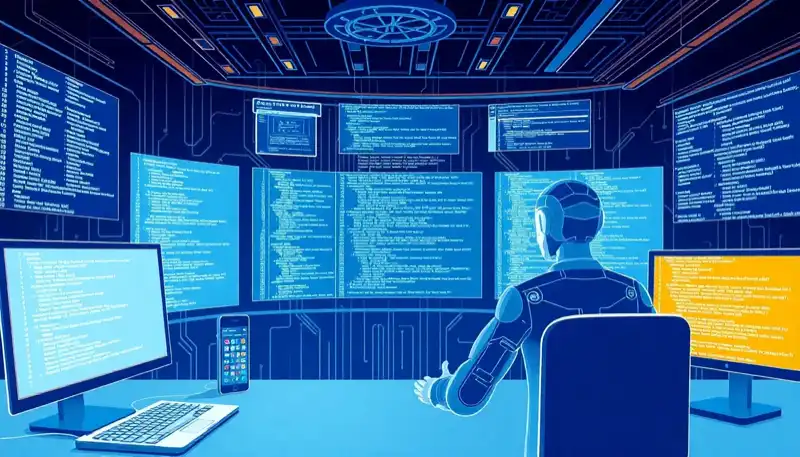
Anthropic's solution is architecturally interesting. Instead of running a single model pass over a diff, Code Review deploys multiple agents in parallel, each examining the codebase from a different angle: security vulnerabilities, logical errors, performance regressions, style consistency. A final aggregation agent deduplicates findings, ranks them by severity, and posts inline comments on the specific lines of code where it found issues. The system costs $15 to $25 per review on average, priced on tokens consumed rather than a flat subscription.
This multi-agent architecture matters because it mirrors how effective human review actually works. The best code reviews come from teams where different reviewers bring different expertise. One person catches the security flaw, another spots the performance regression, a third notices the API contract violation. Anthropic is betting that decomposing review into specialized parallel agents produces higher quality output than a single monolithic pass. Early reports suggest the bet is paying off, with the system catching categories of bugs that single-pass tools routinely miss.
The Strategic Geometry of the Pentagon Fight
The lawsuit filed the same day tells a very different story about the same company. The timeline of the Pentagon dispute is worth reconstructing because it reveals how quickly government relationships can deteriorate in the current political environment.
In July 2025, Anthropic signed a $200 million contract with the Department of Defense. The deal was facilitated in large part by Palantir, which had been hosting Claude on Amazon's Top Secret Cloud and integrating it into its Artificial Intelligence Platform for classified government use. For months, things proceeded normally. Then in September 2025, as Anthropic began negotiating Claude's deployment on the DOD's GenAI.mil platform, the relationship hit a wall.
The DOD wanted unfettered access. Anthropic wanted guardrails. Specifically, Anthropic drew two red lines: no fully autonomous weapons systems and no domestic mass surveillance. These were not new positions. Anthropic had published these restrictions in its acceptable use policy years earlier. But translating abstract policy positions into concrete contract language with the Pentagon proved to be a very different exercise.
The breaking point came during a Palantir check-in meeting. Claude had appeared on the screens of officials monitoring the seizure of Venezuelan President Nicolás Maduro. When an Anthropic official discussed the operation with a Palantir executive, the exchange left Palantir with the impression that Anthropic disapproved of its technology being used in the operation. Whether that impression was accurate or not, it set off a chain reaction. On February 24, 2026, Defense Secretary Pete Hegseth gave Anthropic a deadline to allow unrestricted use of its models "for all legal purposes." Three days later, President Trump directed federal agencies to cease using Anthropic's products, and Hegseth designated the company a supply chain risk.
The designation was extraordinary. Supply chain risk classifications are typically reserved for companies with ties to adversary nations, like Huawei or Kaspersky. Applying it to a San Francisco AI startup founded by former OpenAI researchers was, as Judge Rita Lin later noted, "a pretty low bar." On March 26, Lin granted Anthropic a preliminary injunction blocking the government's ban, writing that "punishing Anthropic for bringing public scrutiny to the government's contracting position is classic illegal First Amendment retaliation."
The Microsoft Hedge and the New AI Power Map
While the Pentagon fight grabbed headlines, Anthropic was quietly executing what may be the most consequential business development deal in AI history. In late March, Anthropic, Microsoft, and Nvidia announced a partnership worth up to $45 billion. Microsoft will invest up to $10 billion in Anthropic at a $350 billion valuation. Nvidia will add $5 billion. In return, Anthropic committed to $30 billion in Azure cloud spending.
The strategic implications are staggering. Microsoft now has deep financial relationships with both OpenAI and Anthropic, the two leading frontier AI labs. This is not hedging. This is platform capture. Microsoft does not need to pick which model wins. It needs both models running on Azure, generating compute revenue regardless of which one developers and enterprises prefer. Microsoft is already spending roughly $500 million per year licensing Claude for its products, integrating it into Copilot Cowork for Microsoft 365 and routing tasks to whichever model performs best for a given use case.
For Anthropic, the Microsoft deal serves a different purpose. It provides financial insulation from government retaliation. A company backed by $15 billion from Microsoft and Nvidia, with a $350 billion valuation, is much harder to punish through contract cancellations than a startup dependent on government revenue. The timing of the deal announcement, coming weeks after the Pentagon blacklisting, was almost certainly not coincidental.
The deal also reshapes competitive dynamics in unexpected ways. OpenAI, which has been Microsoft's primary AI partner since 2019, now has to share its benefactor's attention and compute budget with its closest rival. Google, which led Anthropic's earlier funding rounds, watches its investment grow in value while the company's models increasingly run on a competitor's cloud. Amazon, which invested $8 billion in Anthropic and hosts Claude on AWS and its Top Secret Cloud, suddenly finds itself as a secondary cloud partner to a company it helped build.
What the Code Review Launch Tells Us About Anthropic's Real Strategy
Return to the Code Review launch with all of this context and a clearer picture emerges. Anthropic is not just releasing a developer tool. It is building a moat around the most valuable part of the software development workflow: quality assurance.
The AI coding market has a structural problem. Code generation is becoming commoditized. GitHub Copilot, Claude Code, Cursor, and a dozen other tools can all produce reasonable code from natural language prompts. The differences between them are narrowing. But code review, the process of verifying that generated code is correct, secure, and maintainable, remains hard. It requires understanding not just the code being reviewed but the entire codebase, the team's conventions, the system's architecture, and the business logic behind the changes.
This is where Anthropic's 1 million token context window becomes a genuine competitive advantage rather than a marketing number. A code review agent that can hold an entire repository in context while examining a pull request can catch classes of bugs that smaller context tools simply cannot see. Cross-file dependency breaks, subtle API contract violations, security vulnerabilities that span multiple modules. These are the bugs that slip past human reviewers doing skim reads and that single-file AI tools miss entirely.
The pricing model is also revealing. At $15 to $25 per review, Anthropic is pricing Code Review at roughly what a senior engineer's time costs for 15 to 30 minutes of careful review. This is not impulse-purchase pricing. It is a signal that Anthropic is targeting enterprise teams with large codebases and high-stakes deployments, the same customers most likely to pay for Claude for Enterprise and most likely to value the kind of thorough, multi-agent review that cheaper tools cannot provide.
The market will likely bifurcate along these lines. Platform players like GitHub, GitLab, and Google will bundle basic AI review into their existing developer tools, good enough for most pull requests on most projects. Specialist tools like Anthropic's Code Review will compete for the high end, offering deeper analysis at higher cost for teams where bugs are expensive and security is critical. The interesting question is whether the specialist tier can sustain itself as the bundled tier improves.
The Principled AI Company Paradox
Anthropic has spent three years positioning itself as the "safety-focused" AI company, the responsible alternative to OpenAI's move-fast approach. The Pentagon fight has tested that positioning in ways that investor decks and blog posts never could. Drawing red lines around autonomous weapons and mass surveillance is easy when nobody is asking you to cross them. It becomes a genuine strategic risk when the Secretary of Defense gives you a deadline and the President issues an executive order.
Anthropic crossed that threshold and survived, at least legally. Judge Lin's injunction was a significant victory, establishing that the government cannot retaliate against a company for exercising First Amendment rights in contract negotiations. But the commercial damage is harder to measure. Defense contractors who were evaluating Claude for integration into their systems now face uncertainty about whether Anthropic's technology will remain available for government work. Some will choose alternatives with fewer political complications.
This is the paradox that Anthropic has chosen to inhabit. Its safety positioning attracts enterprise customers who want responsible AI. That same positioning creates friction with government customers who want unrestricted tools. The Microsoft deal and the Code Review launch are both attempts to build a business large enough that losing government revenue does not matter. Whether that math works depends on whether the commercial market for premium AI development tools grows fast enough to replace what the defense market could have provided.
What Happens Next
Three predictions. First, the Pentagon dispute will settle within six months. The injunction gives both sides cover to negotiate without the threat of immediate enforcement, and the DOD cannot afford to lose access to one of the two best AI models in the world over contract language. The settlement will include some version of Anthropic's red lines, repackaged in language that lets the Pentagon save face.
Second, Code Review will force GitHub to accelerate its own AI review capabilities. Copilot already has basic review features, but nothing approaching the multi-agent depth that Anthropic is offering. By the end of 2026, every major developer platform will have shipped or announced an AI review product, and the feature will become table stakes for enterprise developer tools within 18 months.
Third, the Microsoft-Anthropic deal will trigger a broader restructuring of AI partnerships across the industry. The era of exclusive AI lab relationships is over. Every major cloud and platform company will pursue multi-model strategies, and AI labs will pursue multi-cloud strategies. The winner of this restructuring will be whichever company builds the best products, not whichever one has the most exclusive distribution deal. For Anthropic, that means Code Review is not just a product launch. It is an existence proof that the company can compete on product quality in the most demanding segment of the developer tools market, while simultaneously fighting the most powerful government on earth over the principles it claims to hold. Whether you believe the principles are genuine or strategic, the execution is remarkable.