

Apple's MotionVFX Buy Signals a Full Creative Suite War
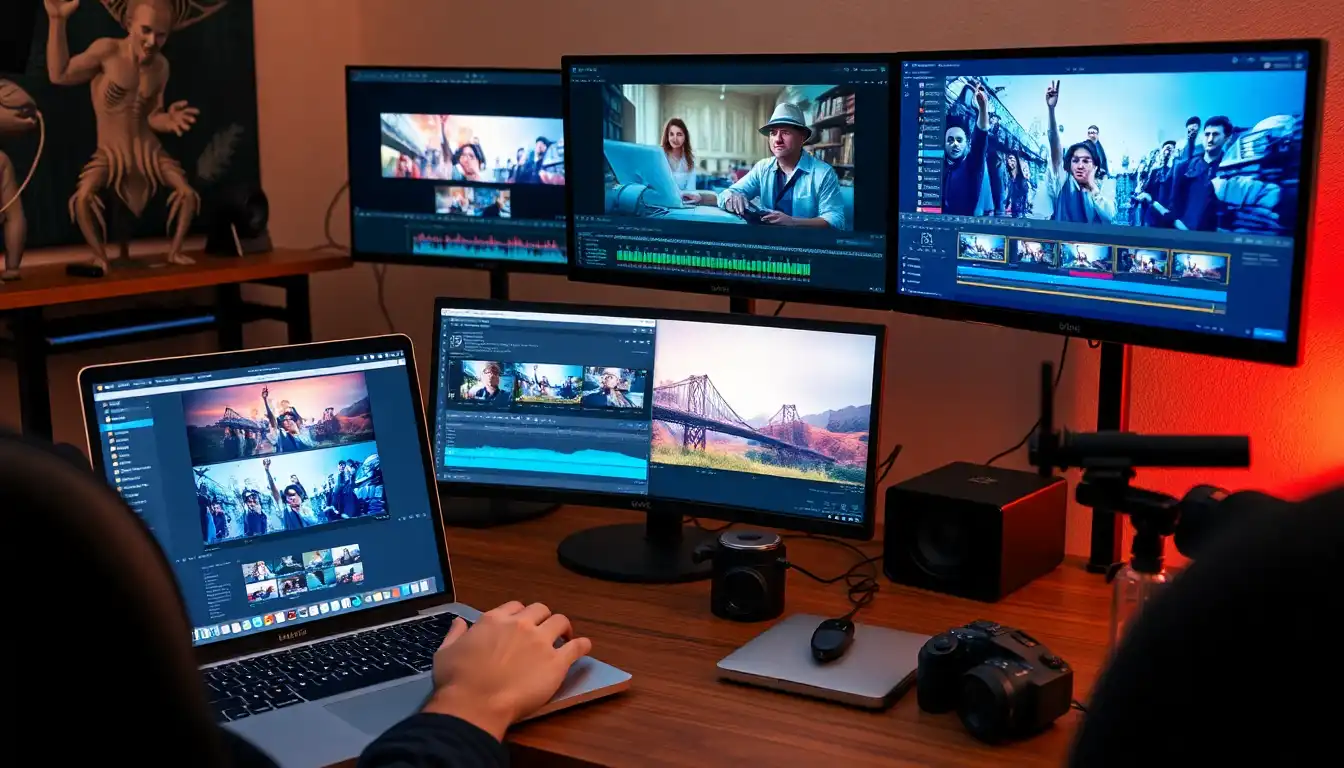
Apple just acquired MotionVFX, the Polish developer behind some of the most popular plugins and motion graphics templates for Final Cut Pro. On its own, buying a 70-person plugin shop barely registers on Apple's balance sheet. But this is not an isolated deal. It is the third acquisition in 16 months aimed at the same target: building a vertically integrated creative software suite that sells for $12.99 a month, roughly one-fifth the price of Adobe Creative Cloud. The real story is not what Apple bought. It is the strategy those purchases reveal and the competitive dynamics they set in motion.
The Acquisition Pattern Nobody Is Connecting
In November 2024, Apple closed its acquisition of Pixelmator, the Lithuanian team behind Pixelmator Pro and Photomator. Those apps gave Apple something it had never built internally: a credible Photoshop alternative with machine learning tools for object removal, intelligent selection, and on-device image enhancement. Pixelmator's entire engineering philosophy, running sophisticated AI features locally on Apple Silicon without cloud processing, made it a natural fit for Apple's privacy-first positioning.
Then in January 2026, Apple launched Creator Studio, bundling Final Cut Pro, Logic Pro, Pixelmator Pro, Motion, Compressor, and MainStage into a single subscription at $12.99 per month or $129 per year. The student price dropped to $2.99 per month. Family Sharing extended the subscription to five additional accounts at no extra cost. That pricing was not designed to maximize per-user revenue. It was designed to maximize adoption.
Six weeks later, Apple acquired MotionVFX. The company's product line fills the exact gap Creator Studio had on day one: professional-grade motion graphics, cinematic color grading plugins like mFilmLook, 3D model integration through mO2, and a deep library of transitions and templates that let editors produce broadcast-quality work without After Effects. MotionVFX also built Design Studio, a panel extension that lives inside Final Cut Pro and lets users browse and install assets without leaving their timeline.
Read these three moves in sequence and the strategy is obvious. Apple is assembling, through targeted acquisitions, every component needed to offer a complete creative workflow: photo editing, video editing, motion graphics, audio production, and publishing templates. Each acquisition plugs a specific hole. Each feeds into the same $12.99 subscription funnel.
The $55 Per Month Problem for Adobe
Adobe Creative Cloud's All Apps plan costs $59.99 per month in the United States. For that, you get Photoshop, Premiere Pro, After Effects, Illustrator, and roughly two dozen other applications. Adobe reported over 41 million paid Creative Cloud subscribers at the end of 2025, driving a Digital Media segment on pace for approximately $17.3 billion in annual revenue. The company's fiscal year 2026 guidance projects total revenue between $25.9 billion and $26.1 billion.
Those numbers look impregnable until you examine the composition of that subscriber base. A significant portion of Creative Cloud subscribers are individual creators, freelancers, students, and small teams who use two or three apps at most. They pay for the full suite because Adobe's individual app pricing ($22.99/month for a single app) makes the bundle feel like the rational choice. This is the segment Apple is targeting.
At $12.99 per month with family sharing included, Apple Creator Studio does not need to match Adobe feature-for-feature. It needs to be good enough for the creator who edits YouTube videos in Premiere, occasionally touches up photos in Photoshop, and uses a handful of After Effects templates for lower thirds and transitions. That creator represents tens of millions of users. With MotionVFX's template library and plugin ecosystem absorbed into Final Cut Pro, the "good enough" bar just got significantly higher.
Adobe's moat has always been workflow lock-in: project files, plugin ecosystems, and muscle memory built over decades. But that moat depends on professionals who cannot afford to switch. The amateur and prosumer segment, which represents the growth frontier for both companies, has no such lock-in. A college student who starts on Creator Studio at $2.99 per month has no Premiere project files to migrate, no After Effects expressions to rewrite, no reason to pay twenty times more for tools they will learn to use elsewhere.
Why the Plugin Ecosystem Play Matters More Than the Apps
The underappreciated dimension of the MotionVFX deal is what it means for the Final Cut Pro plugin ecosystem. MotionVFX was not just a plugin developer. It was the plugin distribution platform for Final Cut Pro. Its mExtension panel and Design Studio effectively served as an app store within Final Cut Pro, letting editors discover, purchase, and install third-party assets without leaving their editing environment.
Apple now owns that distribution layer. This is the same playbook Apple has run repeatedly: control the platform, then control the marketplace on top of it. The App Store for iOS. Apple News for publishers. The iBooks Store for authors. In each case, Apple positioned itself as both the platform provider and the primary storefront, extracting leverage over the entire ecosystem.
For the community of independent Final Cut Pro plugin developers, the MotionVFX acquisition introduces real uncertainty. Will Apple integrate MotionVFX's distribution tools into a first-party plugin marketplace? Will third-party plugins compete on equal footing with Apple-owned MotionVFX assets now bundled into Creator Studio? The history of Apple's platform strategy suggests that third-party developers will face a familiar dilemma: build on Apple's platform and accept the risk that Apple will absorb your market, or build elsewhere and forfeit access to Apple's users.
There is also the DaVinci Resolve angle. MotionVFX had been expanding its product line to support Blackmagic Design's DaVinci Resolve, a free and increasingly capable competitor to both Premiere Pro and Final Cut Pro. Under Apple's ownership, that cross-platform support is almost certainly going to be deprioritized or discontinued. DaVinci Resolve users who relied on MotionVFX templates will need to find alternatives. Blackmagic, which has been steadily building its own Resolve ecosystem, just lost one of the most prominent third-party plugin developers on its platform to a direct competitor.
The Hardware-Software Flywheel Gets Faster
Every conversation about Apple's creative software strategy eventually circles back to Apple Silicon. And for good reason. The M-series chips gave Apple something Adobe cannot replicate: the ability to optimize both the hardware and the software simultaneously. Final Cut Pro's performance on Apple Silicon is not just competitive with Premiere Pro on equivalent hardware. It is dramatically faster for most common editing tasks, particularly with ProRes media.
MotionVFX's most technically impressive products, particularly mO2's real-time 3D model rendering inside Final Cut Pro, depend heavily on GPU performance and Metal framework integration. Under Apple's ownership, the MotionVFX engineering team gains direct access to Apple's silicon roadmap, Metal API development, and unreleased hardware specifications. This is the same advantage that allowed Apple's first-party apps to ship with Apple Silicon optimizations on day one while Adobe spent over a year bringing native support to its Creative Cloud apps.
The flywheel works like this: better creative software drives Mac adoption among creators. More creators on Mac means more subscribers to Creator Studio. More subscribers justify further investment in creative tools and acquisitions. And each new M-series chip generation makes those tools faster, widening the performance gap with cross-platform competitors running on commodity hardware. Apple does not need to win the professional post-production market overnight. It needs to make the integrated experience compelling enough that each new generation of creators defaults to the Apple ecosystem.
This is where AI enters the picture. Creator Studio's launch included AI-powered features in Final Cut Pro: Transcript Search, Visual Search, and Beat Detection for automated music-aligned editing. Pixelmator Pro brought on-device machine learning for photo enhancement. MotionVFX's template engine could be enhanced with generative AI to let users customize motion graphics through natural language prompts, all running locally on Apple Silicon with no cloud dependency. Apple's on-device AI approach, which looked like a limitation compared to Adobe's cloud-powered Firefly in 2024, starts to look like a genuine differentiator as creators grow wary of uploading proprietary footage to cloud services.
What Builders and Creators Should Do Now
If you are building tools or plugins for the Final Cut Pro ecosystem, the MotionVFX acquisition is a clear signal to diversify. Apple has demonstrated that it will acquire successful ecosystem participants and fold their products into its own offerings. Building exclusively for Apple's creative platform now carries the same risk that building exclusively for iOS always has, with the added wrinkle that Apple is now actively consolidating the creative tools layer above the operating system.
If you are an independent creator choosing a primary editing platform, the calculus has shifted. Adobe still offers the deepest feature set and the broadest third-party ecosystem. But Apple is now offering a legitimate alternative at a fraction of the cost, with performance advantages on its own hardware and a clear roadmap of continued investment. For creators who are already in the Apple hardware ecosystem, the switching cost to Creator Studio is approaching zero.
If you are Adobe, the correct response is not to panic about pricing. Adobe cannot match $12.99 per month without destroying its revenue base. The correct response is to double down on what Apple cannot replicate: cross-platform support, deep integrations with enterprise workflows, and the network effects of being the industry standard in agencies, studios, and newsrooms. Adobe's vulnerability is not at the top of the market. It is at the bottom, where the next generation of creators is making their first platform choice.
Where This Goes Next
Three predictions. First, Apple will launch a first-party plugin and asset marketplace within Final Cut Pro by 2027, built on MotionVFX's distribution infrastructure. It will take a 30% cut, consistent with App Store economics, and it will become the default discovery mechanism for Final Cut Pro extensions.
Second, Apple will acquire at least one more creative tool company within the next 18 months. The obvious gap in Creator Studio is vector illustration and graphic design, the Illustrator and InDesign equivalents. Sketch, which has struggled against Figma, or an emerging design tool with strong Apple platform integration, would fit the pattern.
Third, Adobe will respond by making its individual app subscriptions more competitive, likely introducing a "Premiere + After Effects" bundle at a lower price point to defend the video editing segment specifically. The all-apps bundle price will hold, but Adobe will be forced to unbundle selectively to compete where Apple is strongest.
The MotionVFX acquisition costs Apple almost nothing relative to its resources. But it advances a strategy that, if executed over the next three to five years, could redirect billions in creative software spending away from Adobe and toward Apple's growing subscription ecosystem. Apple is not building a Premiere Pro killer. It is building something potentially more disruptive: a creative suite that is good enough, cheap enough, and fast enough on Apple hardware that an entire generation of creators never bothers to learn Adobe's tools in the first place.