

Google's AI Play: A New Era for Office Productivity
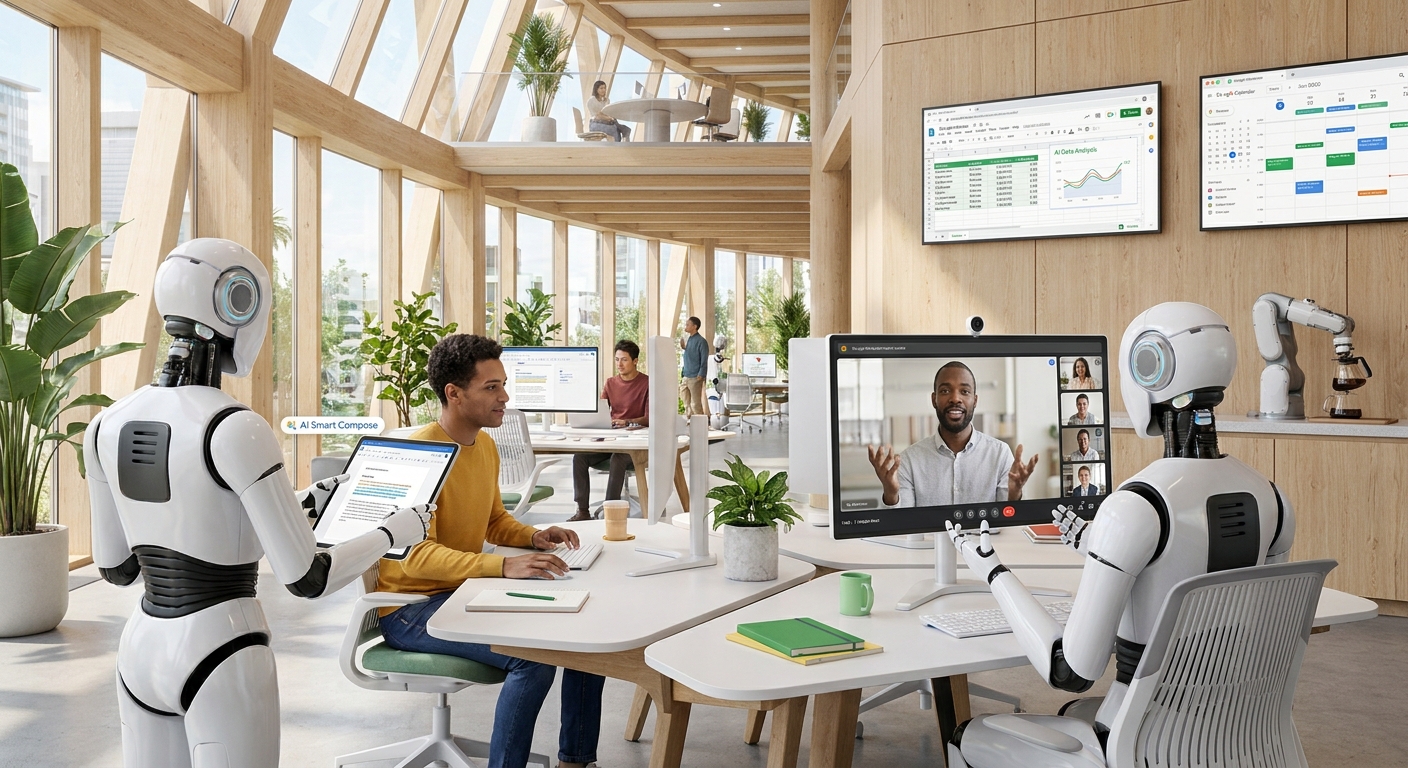
Google's recent update to Workspace, incorporating Workspace Intelligence, an AI system designed to automate various office tasks, signals a significant inflection point in the evolution of office productivity software. This move is not merely a incremental update, but rather a strategic play to redefine the role of AI in the workplace, and it has profound implications for the entire industry.
Historical Context: The Road to Automation
The concept of automation in office productivity is not new. In 2019, Microsoft introduced its own AI-powered tools in Microsoft 365, aimed at enhancing user experience and streamlining tasks. However, Google's approach with Workspace Intelligence marks a more comprehensive integration of AI, potentially setting a new standard for what users expect from their productivity suites. Looking back, the seeds of this development were sown in 2020 when Google began aggressively investing in AI research, culminating in the development of more sophisticated machine learning models capable of handling complex tasks.
Competitive Analysis: The Battle for Productivity Supremacy
The introduction of Workspace Intelligence puts Google in a strong position against its competitors, particularly Microsoft and Slack. Microsoft 365, while having its own set of AI-powered features, may struggle to match the breadth and depth of Google's automation capabilities. Slack, on the other hand, faces a more existential challenge as its core value proposition as a communication platform may be eroded by Google's more holistic approach to office productivity. The real question is how these competitors will respond. Will Microsoft double down on its AI investments, or will Slack pivot towards more specialized services to stay relevant?
Technical Deep Dive: The Mechanics of Workspace Intelligence
Workspace Intelligence relies on advanced machine learning algorithms to analyze user behavior, automate repetitive tasks, and predict user needs. At its core, it utilizes a combination of natural language processing (NLP) and computer vision to understand the context of user interactions within the Workspace environment. This allows for personalized recommendations, automated document generation, and smart task management. For instance, Workspace Intelligence can analyze email patterns to suggest potential recipients and content, streamlining communication. However, the true power of Workspace Intelligence lies in its ability to learn from user feedback, continuously improving its performance over time.
Second-Order Effects: The Future of Work
The integration of AI into office productivity software will have far-reaching consequences. As AI assumes more mundane and repetitive tasks, employees will be freed to focus on higher-value tasks requiring creativity, empathy, and problem-solving skills. This shift could lead to a more efficient and satisfied workforce. However, it also raises questions about job displacement and the need for workers to acquire new skills that complement AI capabilities. Organizations will need to invest in retraining programs and adapt their management structures to fully leverage the potential of AI-driven productivity tools.
Contrarian Take: The Limits of AI in Productivity
While the hype surrounding AI in office productivity is undeniable, it's crucial to acknowledge the limitations of these systems. AI, no matter how advanced, lacks the nuance and judgment of human decision-making. Over-reliance on automation could lead to a loss of critical thinking skills among workers and a failure to address complex problems that require human intuition. Moreover, the privacy and security implications of relying on AI to handle sensitive office tasks cannot be overlooked. As we embrace the efficiency gains of AI, we must also ensure that we do not compromise on these essential aspects of workplace operations.
Forward-Looking Predictions
Given the trajectory of AI integration in office productivity, several predictions can be made with confidence. First, the demand for AI literacy among workers will skyrocket, leading to a boom in educational programs focused on AI and machine learning. Second, we will see a significant increase in AI-driven startups aiming to disrupt specific sectors of the productivity market. Lastly, the lines between productivity software and enterprise resource planning (ERP) systems will blur, as AI enables a more holistic approach to business operations. By 2028, it's likely that AI will be an indispensable component of any office setup, forcing a radical rethink of what it means to be productive in the digital age.