

Honda's $15.7B EV Retreat Validates Toyota's Hybrid Bet
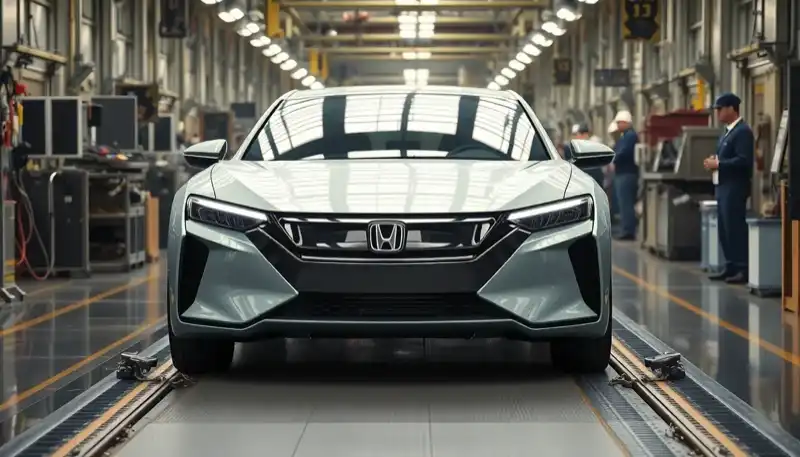
Honda's announcement in March 2026 that it would kill three electric vehicles, the Honda 0 SUV, the Honda 0 Saloon, and the Acura RSX, just months before they were scheduled to roll off assembly lines in Ohio, is not merely a product cancellation. It is the most expensive admission of strategic failure in Honda's 78-year history. The accompanying write-down of up to 2.5 trillion yen ($15.7 billion) does not just erase a product line. It erases a five-year thesis about how a legacy Japanese automaker could compete in the electric age. And it raises a question that should unsettle every traditional car company still chasing Tesla and BYD: what if the entire approach was wrong from the start?
Three Strikes and a $15.7 Billion Bill
To understand the scale of Honda's failure, you have to trace the full sequence of abandoned EV strategies that preceded this moment. Each one was supposed to be the answer. Each one collapsed.
Strike one: the GM Ultium partnership. In 2020, Honda announced it would co-develop affordable EVs with General Motors using GM's Ultium battery platform. The idea was elegant: let GM handle the expensive, risky battery engineering while Honda focused on design and brand. The partnership produced exactly one vehicle, the Honda Prologue, which launched in March 2024. Despite outselling every GM-branded EV that year, Honda pulled the plug on the broader Ultium collaboration in October 2023. The official reason was a desire to develop proprietary EV architecture. The real reason was that relying on a competitor for your core technology is a strategic dead end.
Strike two: the Nissan merger. In December 2024, Honda and Nissan announced a memorandum of understanding to explore a full merger, which would have created the world's third-largest automaker. The logic was scale: combining R&D budgets to split the enormous cost of EV development, software platforms, and battery manufacturing. By February 2025, the talks collapsed. Honda wanted Nissan as a subsidiary. Nissan, still traumatized by its dysfunctional alliance with Renault, refused to cede control. The $60 billion mega-deal evaporated in weeks.
Strike three: the 0 Series and Acura RSX. This was supposed to be Honda going it alone, proving it could build world-class EVs on its own platform, manufactured in its own Ohio factories. The 0 Saloon, a wedge-shaped sedan shown at CES 2024, was meant to signal Honda's design ambition. The 0 SUV was the volume play. The Acura RSX, a midsize luxury electric crossover reviving a beloved nameplate, was the halo product. Honda invested $700 million retooling three Ohio plants and committed $3.5 billion with LG Energy Solution for a battery factory in Jeffersonville. Then, in March 2026, it killed all three vehicles before a single one reached a customer.
The pattern is unmistakable. Honda has spent five years and billions of dollars cycling through EV strategies, executing none of them to completion. The Prologue was a borrowed car. The Nissan merger was a borrowed balance sheet. The 0 Series was finally Honda's own vision, and the company did not have the conviction to see it through.
Toyota Was Right All Along
For years, Toyota endured mockery from EV advocates and tech journalists who dismissed its hybrid-first strategy as timid, backwards, and destined for irrelevance. Akio Toyoda's repeated warnings that the industry was rushing toward full electrification without adequate infrastructure, consumer demand, or profitable economics were treated as the protestations of a dinosaur.
In 2026, Toyota looks like the smartest company in the automotive industry.
The numbers are stark. In 2025, electrified vehicles, predominantly hybrids, accounted for over 50 percent of Toyota's U.S. sales. Toyota sold 4.43 million hybrids worldwide that year. The 2025 Camry is now hybrid-only. The 2026 RAV4 will be offered solely as a hybrid or plug-in hybrid. Toyota is investing $1.1 billion to retool its Ontario plant for the hybrid RAV4 and another $912 million across five U.S. plants for advanced hybrid powertrains. It plans to produce 6.7 million hybrid and PHEV units annually by 2028.
The critical insight Toyota grasped, and Honda missed, is that the transition to EVs is not a light switch. It is a decade-long gradient, and the companies that will dominate are those generating enormous cash flow from hybrids today while methodically building EV capability for tomorrow. Toyota is now using hybrid profits to fund a quadrupling of its EV lineup, entering the BEV market from a position of financial strength rather than desperation.
Honda, by contrast, is entering its hybrid pivot from a position of catastrophic loss. The company cut its 2030 global EV sales target from 30 percent to 20 percent and announced it would "further strengthen its hybrid models." This is not a strategy. It is a retreat dressed up in corporate language. Honda is now attempting to execute the playbook Toyota has been running for a decade, except Toyota has a 27-year head start in hybrid technology dating back to the original 1997 Prius, and Honda is starting with a $15.7 billion hole in its balance sheet.
The Real Threat Is Not Tesla. It Is BYD.
Honda's official statement cited two factors for the cancellation: declining EV demand in the U.S. and "intensifying competition in Asia, as a wave of new EV brands from China enter the market with more advanced, more efficient vehicles." The first factor is partially true but misleading. U.S. EV retail share did fall to 5.8 percent in Q4 2025 after federal tax credits expired, but total EV sales continue to grow in absolute terms. The demand is not disappearing. It is growing more slowly than the industry's factory buildout assumed.
The second factor is the one that should keep Honda's leadership awake at night. BYD is not just competing in China. It is expanding aggressively across Southeast Asia, Europe, South America, and the Middle East, precisely the global markets where Honda has historically generated significant volume. BYD's Seagull, a capable electric hatchback that sells for under $10,000 in China, represents a cost structure that Honda cannot match with its current manufacturing economics. BYD produced its own batteries, its own semiconductors, and increasingly its own software stack. Its vertical integration gives it a 20-30 percent cost advantage over legacy automakers on comparable vehicles.
Honda's decision to abandon its own EV platform does not solve this problem. It makes it worse. Every year Honda spends retreating to hybrids is a year BYD spends locking in suppliers, building brand loyalty, and establishing dealer networks in markets Honda has served for decades. The competitive threat is not symmetrical: BYD can sell hybrids too, and it has started doing exactly that with its DM-i plug-in hybrid system, which already outsells most competitors in China. Honda is not retreating to safe ground. It is retreating to ground that BYD is also advancing on.
The Ohio Paradox: Billions Spent, Strategy Abandoned
Perhaps the most painful dimension of Honda's reversal is what it means for its Ohio manufacturing complex. Honda's presence in Ohio is enormous: 3,000 workers at the engine plant in Anna, 4,200 in Marysville, 2,700 in East Liberty, and 2,200 at the new LG battery joint venture in Jeffersonville. The company explicitly positioned Ohio as its EV hub, investing billions to retool these plants for electric vehicle production.
Now those plants will continue building the Accord, the Acura Integra, and hybrid models. The battery plant's future is uncertain. Honda has not said whether it will scale back the Jeffersonville facility or repurpose it for hybrid battery packs, which require far less cell capacity than full BEV packs.
For Ohio, this is a cautionary tale about the fragility of industrial policy built around a single company's product roadmap. The state offered incentives, built infrastructure, and marketed itself as an EV manufacturing hub on the strength of Honda's commitment. That commitment lasted less than three years. The jobs will likely survive in some form because Honda still needs to build cars somewhere, and Ohio's labor force and supplier ecosystem are real assets. But the vision of Ohio as an electric vehicle powerhouse, competing with Georgia (Hyundai/Kia), Tennessee (Volkswagen), and Texas (Tesla), has been gutted.
Who Wins, Who Loses, What Comes Next
The competitive implications of Honda's retreat ripple across the industry.
Winners:
- Toyota is the clearest beneficiary. Every Honda customer who might have considered a 0 Series SUV will now cross-shop the Toyota bZ4X or, more likely, a RAV4 hybrid. Toyota's multi-path strategy has been empirically validated by its largest Japanese rival's failure.
- Hyundai/Kia gains in the EV-curious segment. The Ioniq 5, Ioniq 6, and EV6 are now essentially uncontested by Honda in the mainstream electric market. Hyundai's Georgia factory, producing EVs domestically to qualify for whatever incentives remain, gives it a structural advantage Honda just surrendered.
- BYD wins by default in every market outside the U.S. Honda's retreat from EVs in Asia and Europe leaves a vacuum that Chinese manufacturers will fill eagerly.
Losers:
- Honda dealers who invested in EV charging infrastructure, training, and showroom modifications based on Honda's promises now have stranded assets and no electric inventory to sell.
- LG Energy Solution faces reduced demand from a major customer. The Jeffersonville battery plant was purpose-built for Honda's EV program. Repurposing it is possible but expensive and time-consuming.
- Consumers who wanted an affordable, well-built Honda EV. The Prologue will be discontinued by late 2026 with no replacement. Honda's EV lineup will effectively be zero vehicles in 2027.
Predictions:
First, Honda will accelerate its plug-in hybrid development, attempting to bridge the gap with models that offer 40-60 miles of electric range on top of conventional drivetrains. Expect a PHEV CR-V and PHEV Civic within 18 months. This is the least ambitious and most predictable move available.
Second, Honda will eventually return to a partnership model for EVs. The company has now proven it cannot develop a competitive EV platform alone, and it has proven it cannot sustain a partnership with GM or a merger with Nissan. The most likely next partner is a Chinese company, possibly CATL for batteries or even a deeper technology-sharing arrangement that gives Honda access to the cost structures it cannot achieve independently. This will be politically complicated in the U.S. but may be existentially necessary.
Third, Honda's stock will face sustained pressure as investors price in the reality that the company has no credible path to the EV market before 2029 at the earliest. The $15.7 billion write-down is the headline, but the real cost is the three to five years of lost positioning that cannot be bought back at any price.
Honda built its reputation on engineering excellence, reliability, and the quiet confidence that it could solve any technical problem given enough time. The 0 Series cancellation reveals a company that has lost that confidence. Three EV strategies in five years, each abandoned before completion, is not cautious decision-making. It is institutional paralysis. The question is no longer whether Honda can compete in the electric future. It is whether Honda can compete at all in a market that is moving faster than its leadership is willing to go.