
Intel Joins Musk's Terafab: What It Really Means for US Chips
Intel's foundry partnership with Elon Musk's $25B Terafab project signals a new era for US chipmaking. We analyze the competitive dynamics, yield challenges, and geopolitical stakes.
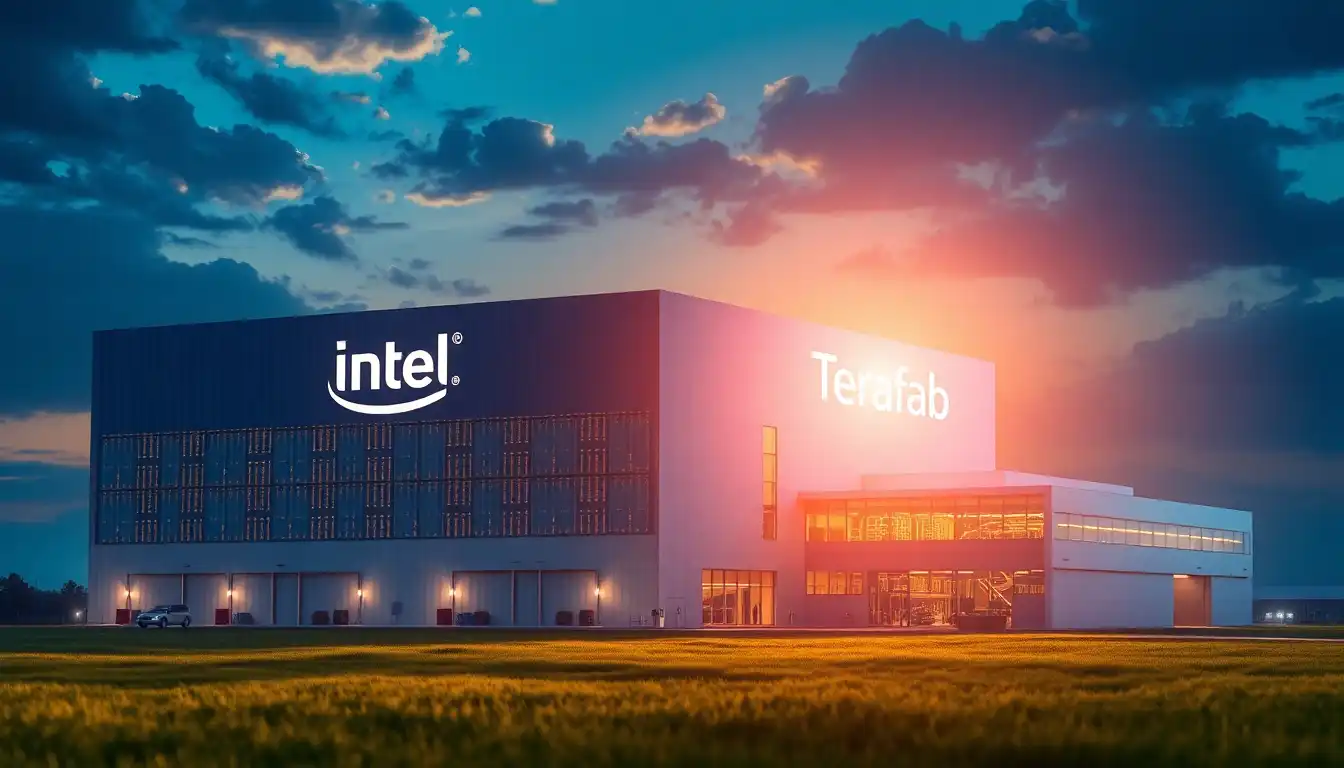
Two years ago, Intel was a company in freefall. Its foundry division was hemorrhaging $10.3 billion annually, its stock had cratered, and the conventional wisdom held that the last great American chipmaker had permanently ceded the bleeding edge to TSMC. Then Lip-Bu Tan took the helm in March 2025, NVIDIA wrote a $5 billion check for 18A capacity, AWS signed a multi-billion dollar custom silicon deal, and now Intel has locked in as the primary foundry partner for the most ambitious semiconductor project ever proposed on American soil: Elon Musk's $25 billion Terafab.
The partnership announced on April 7 is not merely another customer win for Intel Foundry Services. It represents a structural shift in how the United States thinks about chip sovereignty, how Musk is vertically integrating his empire, and whether Intel can actually deliver on the technical promises that have eluded it for the better part of a decade.
The Musk Vertical Integration Play
To understand Terafab, you have to understand Musk's chip problem. Tesla needs inference silicon for its robotaxis and Optimus humanoid robots at a scale that no existing supplier can guarantee. SpaceX needs radiation-hardened, custom-designed processors for its satellite constellation. xAI needs training and inference capacity that currently depends entirely on NVIDIA GPUs fabbed at TSMC in Taiwan. Three companies, three different chip requirements, one shared vulnerability: complete dependence on external silicon supply chains that Musk does not control.
Terafab is the answer to that vulnerability. Planned for the North Campus of Giga Texas in Austin, it aims to consolidate chip design, fabrication, memory production, and advanced packaging under a single roof. The stated goal of producing one terawatt per year of compute is audacious bordering on absurd. For context, the entire global semiconductor industry produces roughly 15 to 20 terawatts of compute annually across all fabs worldwide. A single facility hitting even a fraction of that target would be transformative.
But the ambition is the point. Musk is not building a fab to compete with TSMC on the open market. He is building a captive supply chain for what he clearly believes will be the three largest consumers of silicon in the 2030s: autonomous vehicles, humanoid robots, and AI inference at planetary scale. This is the Henry Ford playbook applied to semiconductors. Ford did not just build cars. He owned the rubber plantations, the iron mines, and the glass factories. Musk wants to own the silicon.
Why Intel, and Why Now
The choice of Intel as foundry partner is more interesting than it appears at first glance. Musk could have courted TSMC, which commands 75% of the leading-edge foundry market and manufactures chips for Apple, NVIDIA, AMD, and Qualcomm. He could have waited for Samsung's troubled 2nm node to mature. Instead, he chose the foundry that lost $2.5 billion in a single quarter last year.
Three factors explain this decision.
First, geography. Terafab is in Austin. Intel's most advanced fabs are in Arizona and Oregon. TSMC's Arizona facility, while operational, remains constrained by yields and workforce challenges that have been well documented. Intel offers a domestic manufacturing partner with deep institutional knowledge of American fab operations, union dynamics, and regulatory environments that foreign competitors simply lack.
Second, the 18A node. Intel's 18A process technology is genuinely competitive for the first time in years. Yields have surged past 60% with monthly improvements averaging 7%, and CFO David Zinsner has indicated margin-appropriate levels by late 2026. Panther Lake client CPUs and Clearwater Forest server chips are already in production. The process design kit has matured enough to attract external customers. For Terafab's purposes, 18A does not need to beat TSMC's N2 on every metric. It needs to be good enough for inference chips, custom AI accelerators, and specialized processors. That bar is lower than the bleeding edge, and Intel can clear it.
Third, leverage. A desperate Intel gives Musk negotiating power that a dominant TSMC never would. Intel needs marquee foundry customers to justify the billions it has sunk into manufacturing infrastructure. Musk needs a partner willing to co-invest in a greenfield facility and share risk. The incentive alignment is almost too clean. Intel gets its most important foundry win to date. Musk gets a partner that will bend over backwards to make the relationship work because the alternative is existential irrelevance.
The Yield Question Nobody Is Asking
Intel bulls are celebrating the Terafab deal as validation of the foundry turnaround. They are not wrong, but they are premature. The gap between signing a partnership agreement and shipping billions of working chips is measured in years and denominated in yield percentages.
Intel's 18A yields currently sit between 60% and 75%, depending on the product and the reporting source. Industry standard for a mature node is 80% or higher. TSMC routinely hits 85% to 90% on established processes. That 10 to 20 percentage point gap translates directly into cost per good die. At 65% yield, roughly one in three wafers produces unusable silicon. At 85% yield, that waste drops to one in seven. For a facility targeting terawatt-scale production, yield improvements of even a few percentage points represent hundreds of millions of dollars in annual cost savings.
Intel has promised industry-standard yields by 2027. That timeline conveniently aligns with when Terafab would need volume production to begin. If 18A yields hit 80% on schedule, the partnership is transformative. If they stall at 70%, Terafab becomes the most expensive beta test in semiconductor history.
The 14A node, Intel's next generation, adds another layer of uncertainty. It will be the industry's first commercial process to use High-NA EUV lithography, a technology so new that only a handful of machines exist globally. High-NA EUV could give Intel a genuine density advantage over TSMC for the first time since the 14nm era. It could also introduce an entirely new category of manufacturing defects that takes years to resolve. Intel is betting that it can leapfrog TSMC's N2 and A14 nodes with a technology that has never been proven at scale. The upside is enormous. The downside is another lost generation.
Geopolitics and the CHIPS Act Endgame
Terafab does not exist in a vacuum. It exists because the United States government decided in 2022 that Taiwan Strait risk was unacceptable and passed the CHIPS and Science Act to subsidize domestic semiconductor manufacturing. Intel has been the single largest beneficiary of CHIPS Act funding, receiving $8.5 billion in direct subsidies and up to $11 billion in loans to build and expand fabs in Arizona, Ohio, Oregon, and New Mexico.
The Terafab partnership effectively extends that taxpayer investment into Musk's private empire. Intel's 18A technology was developed with substantial government support. When that technology is deployed inside Terafab to manufacture chips for Tesla's robotaxis and xAI's inference clusters, the American taxpayer is subsidizing Musk's vertical integration whether Congress intended that outcome or not.
This creates a fascinating political dynamic. The same administration that championed the CHIPS Act to reduce dependence on foreign chipmakers now faces questions about whether subsidized chip technology should flow into the captive supply chain of the world's richest person. National security hawks will argue that any domestic fab strengthens American resilience. Industrial policy skeptics will argue that CHIPS Act funds were meant to build a competitive foundry ecosystem, not a private fiefdom.
The geopolitical calculus cuts both ways for Intel as well. Becoming Musk's foundry partner makes Intel strategically important in a way that transcends quarterly earnings. If Terafab succeeds, Intel becomes indispensable to the infrastructure of autonomous transportation, space-based AI, and humanoid robotics. That is a national security asset that no administration, regardless of party, would allow to fail. Intel's foundry losses look very different when the alternative is ceding critical defense and infrastructure supply chains to TSMC in Taiwan.
Who Wins, Who Loses, What Happens Next
The winners are clear in the short term. Intel gets validation, revenue visibility, and a reason for investors to believe the foundry pivot is real. Its stock jumped 3% on the announcement alone, and the psychological impact on potential customers considering Intel 18A may be worth more than the Terafab revenue itself. If Musk is betting on Intel, maybe the technology actually works.
Musk wins optionality. Even if Terafab takes five years to reach volume production, the mere existence of the project gives Tesla and xAI leverage in negotiations with NVIDIA and TSMC. Every custom chip that Terafab produces is one fewer chip that Musk needs to source from suppliers who also serve his competitors.
The losers are less obvious but more consequential. TSMC loses nothing in the near term. Its dominance at the bleeding edge is unthreatened, and Terafab's initial production will target inference and custom silicon, not the cutting-edge training accelerators where TSMC's N2 and N3 nodes reign supreme. But TSMC should be paying attention to the structural shift this represents. If the world's most capital-rich entrepreneur is willing to spend $25 billion to reduce dependence on TSMC, others will follow. The concentration of advanced chipmaking in Taiwan has always been a feature, not a bug, of TSMC's business model. Terafab is the first serious signal that major customers view that concentration as a liability worth paying billions to mitigate.
Samsung is the quiet loser. Already struggling to secure external foundry customers for its 2nm process, Samsung now watches Intel leapfrog it for the number two foundry position with a single deal. The gap between Intel and Samsung in the foundry race may have just become permanent.
The biggest uncertainty is whether Terafab's ambitions survive contact with semiconductor physics. Building a fab is a five to seven year endeavor. Equipment lead times alone can stretch to three years. The partnership between Intel and Musk's companies will be tested by yield ramps, process qualifications, and the brutal economics of chip manufacturing where a single contamination event can destroy millions of dollars of work-in-progress inventory.
But if it works, Terafab represents something that has not existed since the early days of the semiconductor industry: a vertically integrated American chip complex designed not for the open market but for a specific vision of the future. Whether that vision belongs to one man or to the country that subsidized it is a question that the next decade will answer.