

Notion's AI Hub Revolution
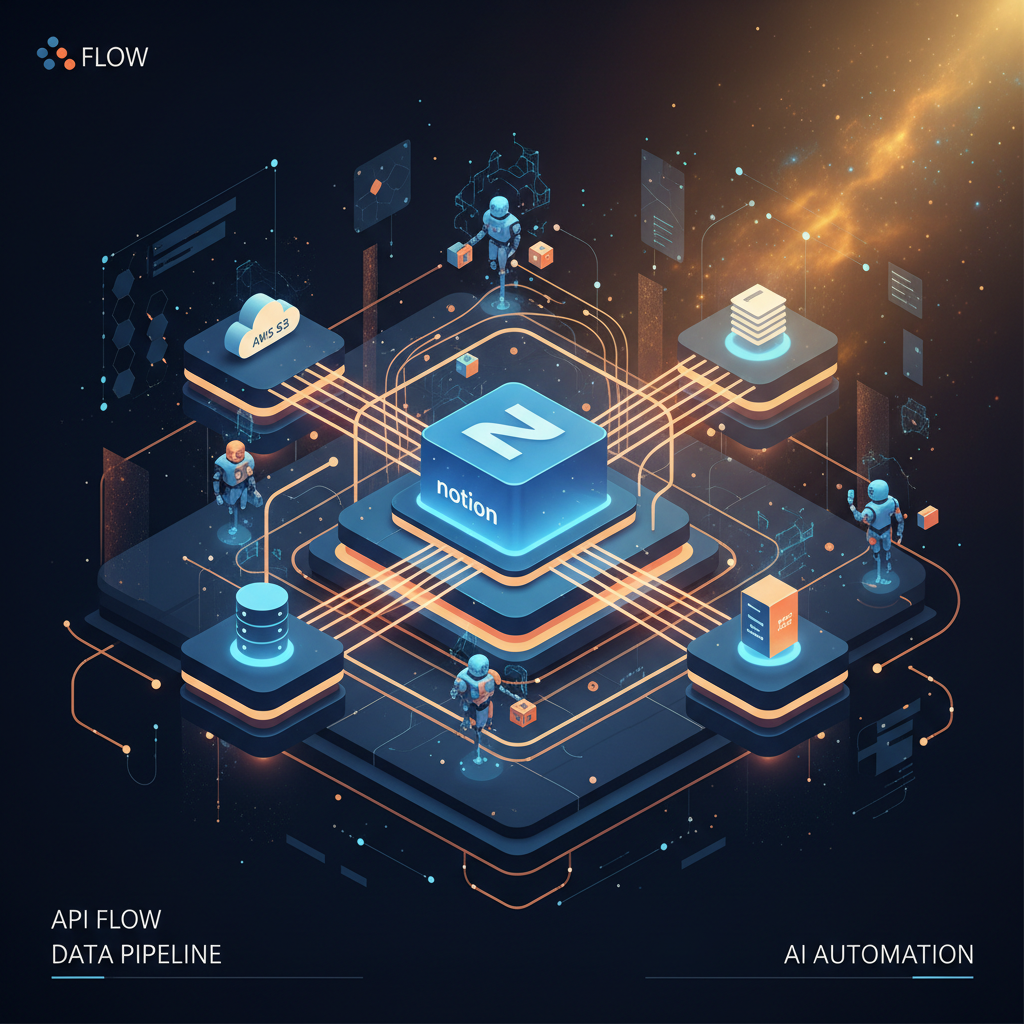
Notion's bold move to turn its workspace into a hub for AI agents marks a significant shift in the company's strategy, one that could redefine the boundaries of productivity software. By allowing teams to connect AI agents, external data sources, and custom code directly into their workspace, Notion is essentially creating a platform that can learn, adapt, and evolve alongside its users. AI agents offers additional context on this topic.
Technical Deep Dive
Notion's new developer platform is built around a modular architecture that enables seamless integration of AI agents, leveraging APIs such as REST and GraphQL to facilitate data exchange. This architecture allows developers to create custom agents that can interact with Notion's core features, such as pages, databases, and calendars, using protocols like OAuth and JWT for secure authentication. With the ability to execute custom code, either through serverless functions or containerized applications, teams can now automate complex workflows and create sophisticated decision-making processes. Performance benchmarks indicate that Notion's platform can handle a significant volume of concurrent requests, typically in the range of hundreds to thousands, without compromising on latency or throughput.Industry Impact
The implications of Notion's move are far-reaching, with potential disruptions to the traditional productivity software landscape. By positioning itself as a hub for AI agents, Notion is poised to challenge established players like Microsoft and Google, who have been slow to adopt agentic technologies. Notion's platform will likely attract a new wave of developers and power users, who will be drawn to the flexibility and customizability it offers. As the platform matures, we can expect to see a proliferation of custom AI agents, each designed to solve specific productivity challenges, such as automated task management, intelligent content generation, and predictive analytics.Competitive Analysis
Notion's competitors will need to respond quickly to this development, as the company's head start in agentic productivity could prove difficult to overcome. Microsoft, with its Azure Cognitive Services, and Google, with its Cloud AI Platform, have the technical capabilities to develop similar platforms, but their efforts will likely be hindered by the complexity of their existing product portfolios. Startups like Coda and Airtable, who have been gaining traction in the productivity space, may find themselves squeezed between Notion's AI-powered offerings and the incumbent players' attempts to catch up.Builder Perspective
For developers and operators, Notion's platform presents a unique opportunity to create innovative solutions that leverage the power of AI agents. To take full advantage of this platform, builders should focus on developing custom agents that can integrate with Notion's core features, using APIs and protocols to facilitate data exchange. They should also explore the use of serverless functions and containerized applications to automate complex workflows and create sophisticated decision-making processes. As the platform evolves, builders will need to stay up-to-date with the latest developments, participating in Notion's developer community and contributing to the growth of the ecosystem.Frequently Asked Questions
How does Notion's AI hub compare to other productivity platforms?
Notion's AI hub is unique in its ability to integrate AI agents, external data sources, and custom code directly into the workspace, creating a platform that can learn, adapt, and evolve alongside its users. While other platforms, like Microsoft Teams and Slack, offer some level of integration with AI-powered tools, they lack the depth and flexibility of Notion's platform. AI agents offers additional context on this topic.
What does this mean for developers using Notion's API?
Developers using Notion's API will need to adapt to the new platform, learning how to create custom agents and integrate them with Notion's core features. This will require a deep understanding of APIs, protocols, and data exchange mechanisms, as well as the ability to develop custom code using serverless functions or containerized applications.
How will Notion's AI hub affect the future of work?
Notion's AI hub has the potential to revolutionize the way we work, enabling teams to automate complex workflows, create sophisticated decision-making processes, and leverage the power of AI to drive productivity. As the platform matures, we can expect to see significant changes in the way teams collaborate, with AI agents playing an increasingly important role in facilitating communication, creativity, and innovation. AI agents offers additional context on this topic.
What are the potential risks and challenges associated with Notion's AI hub?
While Notion's AI hub presents numerous opportunities, it also raises important questions about data security, privacy, and bias. As teams integrate AI agents into their workflows, they will need to ensure that sensitive data is protected, and that AI-powered decision-making processes are fair, transparent, and accountable. Notion will need to address these concerns through robust security measures, clear guidelines, and ongoing education and support. AI agents offers additional context on this topic. For related analysis, see Delta-Mem Revolutionizes AI Agents.
How will Notion's AI hub evolve in the next 12-18 months?
Over the next 12-18 months, Notion's AI hub will likely undergo significant development, with new features, APIs, and tools being added to the platform. We can expect to see improvements in areas like natural language processing, computer vision, and predictive analytics, as well as the introduction of new AI-powered features, such as automated content generation and intelligent task management. As the platform matures, Notion will need to balance the needs of its users with the risks and challenges associated with AI-powered productivity.
In conclusion, Notion's transformation into a hub for AI agents marks a significant turning point in the evolution of productivity software. As the platform continues to mature, we can expect to see profound changes in the way teams work, collaborate, and innovate. With its modular architecture, seamless integrations, and customizability, Notion is poised to redefine the boundaries of agentic productivity, and its impact will be felt across the tech industry for years to come. The next 12-18 months will be critical, as Notion navigates the challenges and opportunities presented by its AI-powered platform, and establishes itself as a leader in the future of work. AI agents offers additional context on this topic.