

Oscars Shut Door On AI
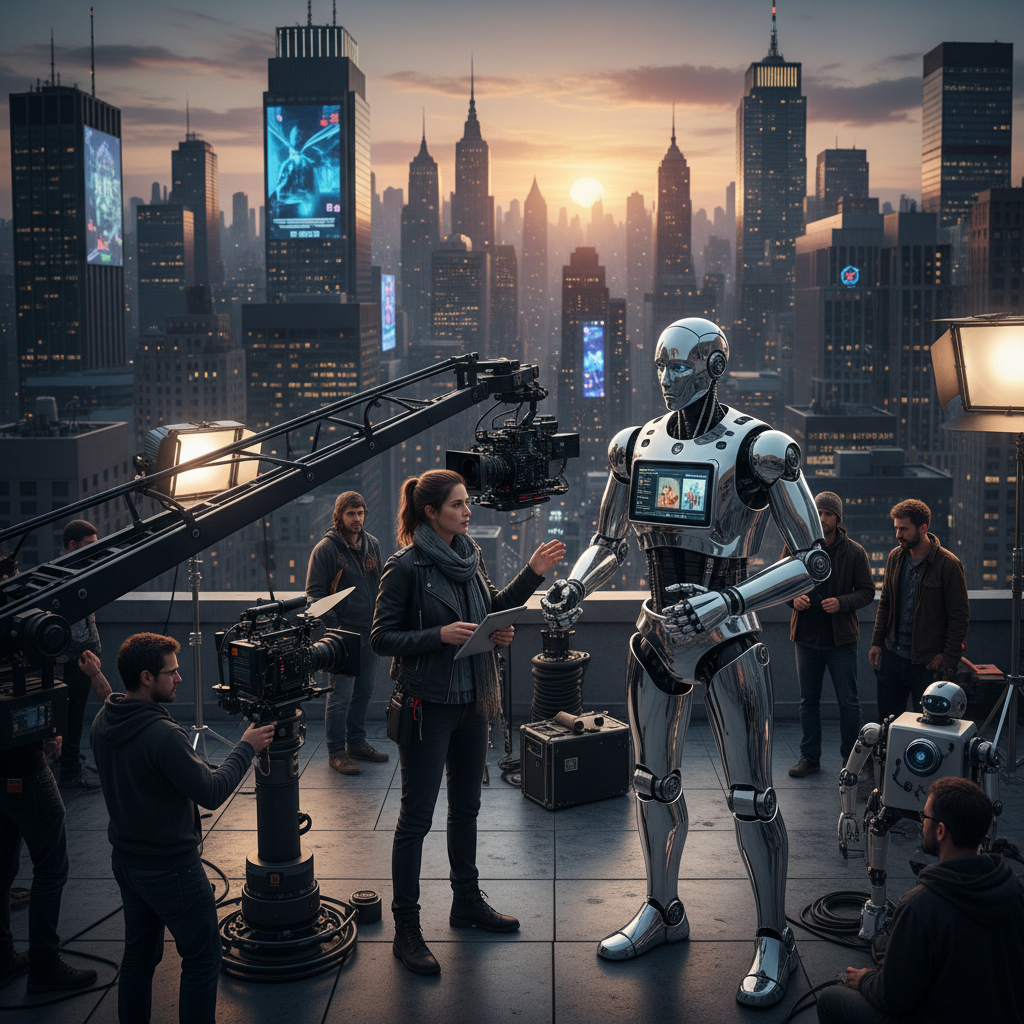
The Academy of Motion Picture Arts and Sciences' decision to render AI-generated actors and scripts ineligible for Oscars is a seismic shift in the film industry, one that has been building for years. Since the release of AlphaGo in 2016, AI has been steadily encroaching on creative domains, with 2020's advent of generative models like GPT-3 marking a point of no return. The film industry, however, has been slow to adapt, with 2022's experimental AI-generated film 'Zone Out' failing to gain traction.
Historical Context: A Tipping Point
Looking back to 2019, when the first AI-generated portrait sold at Christie's for $432,500, it became clear that AI was not just a curious novelty but a force to be reckoned with in creative fields. The subsequent boom in AI-generated music, with platforms like Amper Music and AIVA, further eroded the lines between human and machine creativity. The Oscars' ban is thus a belated recognition of the existential threat AI poses to traditional notions of authorship and artistic labor.
Competitive Analysis: Winners and Losers
The ban will disproportionately affect productions that have invested heavily in AI-generated content, such as Netflix's experimental 'AI-powered' series announced in 2024. On the other hand, traditional talent agencies like Creative Artists Agency and William Morris Endeavor will likely see a resurgence in demand for human talent, as producers scramble to ensure their projects meet the new eligibility criteria. Meanwhile, AI startups like DeepMind and Google Brain will need to pivot their strategies, focusing on more behind-the-scenes applications of AI, such as script analysis and editing tools.
Second-Order Effects: A New Era of Collaboration
As the film industry adjusts to this new reality, we can expect a surge in human-AI collaboration, with writers, directors, and actors working alongside AI tools to generate ideas, develop characters, and even assist in editing. This shift will require a fundamental rethinking of production workflows, with AI-powered project management tools and virtual production platforms becoming essential components of the filmmaking process. The ban will also spur innovation in AI-powered tools that can analyze and improve human-generated content, rather than replacing it. For related analysis, see AI Outperforms Human Doctors in Emergency Room Diagnoses. For related analysis, see Cerebras IPO: AI Chip Maker's Blockbuster Debut. For related analysis, see SEAL: A Leap Towards Autonomous AI. For related analysis, see OpenAI's Codex Giveaway: A Strategic Move. For related analysis, see Unpacking LLM Multi-Agent Failures.
Technical Deep Dive: The Limits of Generative Models
From a technical perspective, the ban highlights the limitations of current generative models, which struggle to replicate the nuance and complexity of human creativity. While AI can generate convincing dialogue or even entire scripts, it lacks the contextual understanding and emotional intelligence that underpins great storytelling. The film industry's emphasis on human touch and emotional resonance will thus remain a significant barrier to AI-generated content, at least in the near term.
Forward-Looking Predictions
By 2028, we can expect to see a new wave of AI-powered filmmaking tools that augment human creativity, rather than replacing it. These tools will enable writers to generate ideas, develop characters, and even assist in editing, while ensuring that the final product remains unmistakably human. The Oscars' ban will also lead to a renewed focus on AI ethics and transparency, with productions being forced to disclose their use of AI-generated content. As the film industry navigates this uncharted territory, one thing is certain: the future of storytelling will be shaped by the interplay between human and artificial intelligence.