

Robotics AI Revolution
AI-assisted analysis. Sourcing and editorial process
Archive article: its original source is not recorded. This article has not passed the current source-backed publication process.
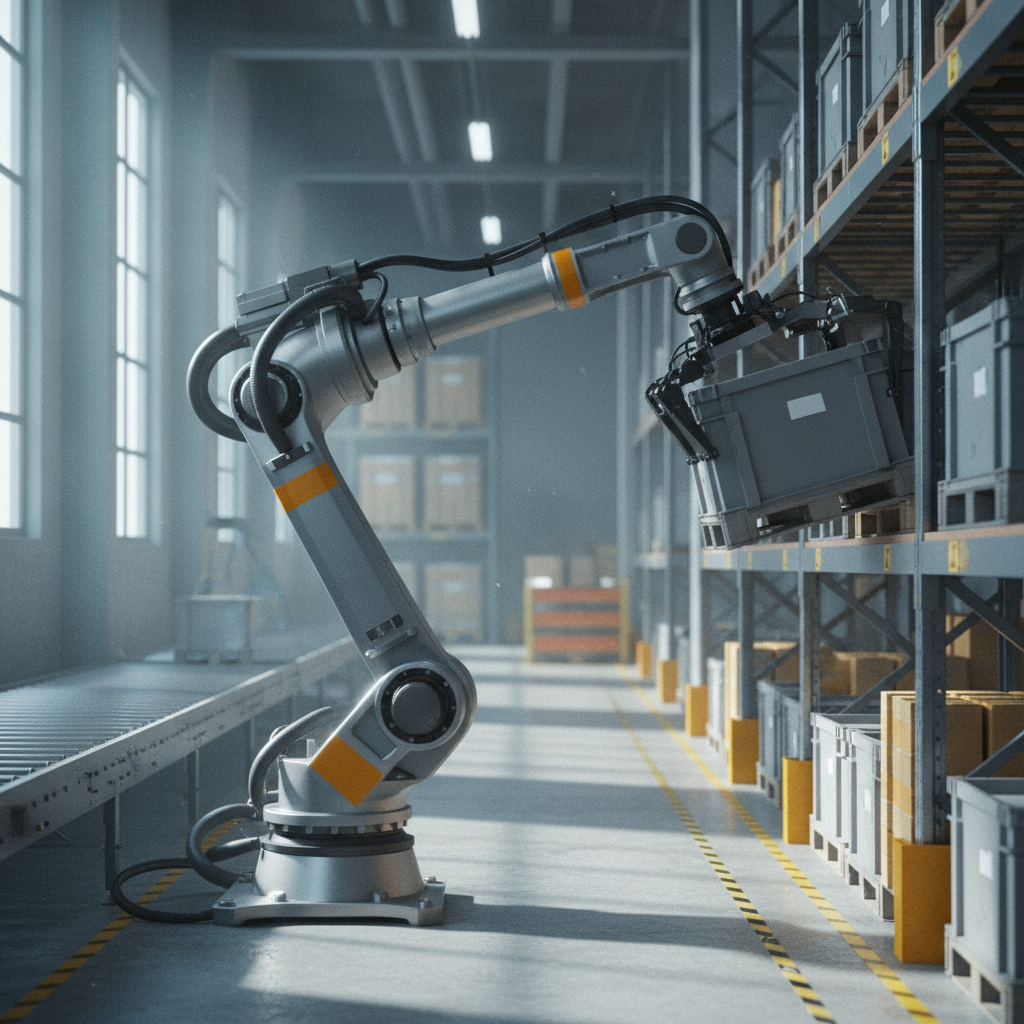
Illustration, not documentary evidence of the event.
The robotics industry is on the cusp of a significant breakthrough, with General Intuition's pioneering work in leveraging millions of hours of video game data to train foundation models for physical AI. This innovative approach has the potential to make it easier to build smarter robots that can learn and adapt with minimal real-world data. By harnessing the power of virtual environments, General Intuition is poised to disrupt the traditional robotics development paradigm. physical AI offers additional context on this topic.
Technical Deep Dive
General Intuition's approach involves using large amounts of video game data to pre-train foundation models, which can then be fine-tuned for specific robotics tasks. This technique, known as transfer learning, enables the models to learn generalizable features and patterns that can be applied to real-world scenarios. The use of video game data provides a unique advantage, as it offers a vast and diverse range of environments, objects, and interactions that can be used to train the models. By leveraging this data, General Intuition can develop more robust and adaptable foundation models that can be used as a starting point for a wide range of robotics applications. Our foundation models analysis explores this further.
The technical architecture underlying General Intuition's approach involves the use of advanced computer vision and machine learning algorithms, such as convolutional neural networks (CNNs) and transformers. These algorithms enable the models to extract relevant features from the video game data and learn complex patterns and relationships. The use of techniques such as data augmentation and domain randomization also helps to improve the robustness and generalizability of the models. By combining these technologies, General Intuition can develop foundation models that are capable of learning from a wide range of data sources and adapting to new and unseen environments. Our Intuit analysis explores this further.
Industry Impact
The potential impact of General Intuition's approach on the robotics industry cannot be overstated. By providing a way to train foundation models using video game data, General Intuition is enabling the development of smarter robots that can learn and adapt with minimal real-world data. This could revolutionize the way robots are designed and deployed, enabling them to be used in a wider range of applications and environments. The use of foundation models also has the potential to reduce the time and cost associated with developing new robotics systems, as developers can leverage pre-trained models and fine-tune them for specific tasks. Our Gemini Robotics 2 analysis explores this further.
The competitive landscape of the robotics industry is also likely to be affected by General Intuition's approach. Companies that are able to leverage foundation models trained on video game data may be able to develop more advanced and adaptable robotics systems, giving them a competitive advantage in the market. This could lead to a shift in the balance of power in the industry, with companies that are able to effectively utilize foundation models emerging as leaders. The use of video game data also has the potential to democratize access to advanced robotics capabilities, enabling smaller companies and startups to develop sophisticated robotics systems without requiring large amounts of real-world data.
Second-Order Effects
The impact of General Intuition's approach is likely to be felt beyond the robotics industry, with potential applications in areas such as autonomous vehicles, healthcare, and education. The use of foundation models trained on video game data could enable the development of more advanced and adaptable systems in these fields, leading to significant improvements in performance and efficiency. The democratization of access to advanced robotics capabilities could also lead to a proliferation of robotics systems in a wide range of industries, enabling new applications and use cases that are not currently possible.
The development of more advanced and adaptable robotics systems could also have significant social and economic implications. The use of robots in industries such as manufacturing and logistics could lead to increased productivity and efficiency, but could also displace human workers. The development of robots that are capable of learning and adapting in complex environments could also raise concerns about safety and accountability, highlighting the need for careful consideration and regulation of the development and deployment of these systems. For related analysis, see XDOF in Talks for $1.2B Series B Just Months After Debut.
Frequently Asked Questions
How does this approach compare to traditional robotics development methods?
Traditional robotics development methods typically involve the use of real-world data to train and test robotics systems. This approach can be time-consuming and expensive, requiring large amounts of data and significant computational resources. General Intuition's approach, on the other hand, uses video game data to pre-train foundation models, which can then be fine-tuned for specific robotics tasks. This approach has the potential to be faster and more cost-effective, enabling the development of more advanced and adaptable robotics systems.
What are the potential applications of this technology in industries beyond robotics?
The potential applications of this technology are vast, with possible uses in areas such as autonomous vehicles, healthcare, and education. The use of foundation models trained on video game data could enable the development of more advanced and adaptable systems in these fields, leading to significant improvements in performance and efficiency. The democratization of access to advanced robotics capabilities could also lead to a proliferation of robotics systems in a wide range of industries, enabling new applications and use cases that are not currently possible.
How will this technology change the way robots are designed and deployed?
The use of foundation models trained on video game data has the potential to revolutionize the way robots are designed and deployed. By providing a way to train robots using virtual environments, General Intuition's approach enables the development of robots that can learn and adapt with minimal real-world data. This could enable the deployment of robots in a wider range of applications and environments, and could also reduce the time and cost associated with developing new robotics systems.
What are the potential risks and challenges associated with this technology?
The development of more advanced and adaptable robotics systems raises significant risks and challenges, including concerns about safety and accountability. The use of robots in industries such as manufacturing and logistics could lead to increased productivity and efficiency, but could also displace human workers. The development of robots that are capable of learning and adapting in complex environments could also raise concerns about the potential for unintended consequences, highlighting the need for careful consideration and regulation of the development and deployment of these systems.
In conclusion, General Intuition's approach to training foundation models using video game data has the potential to revolutionize the robotics industry, enabling the development of smarter robots that can learn and adapt with minimal real-world data. The impact of this technology will be felt beyond the robotics industry, with potential applications in areas such as autonomous vehicles, healthcare, and education. As the development and deployment of these systems become more widespread, it will be important to carefully consider the potential risks and challenges associated with this technology, and to work towards ensuring that the benefits are shared by all.