

Tesla's $25B Gamble: Unpacking the Risks and Rewards
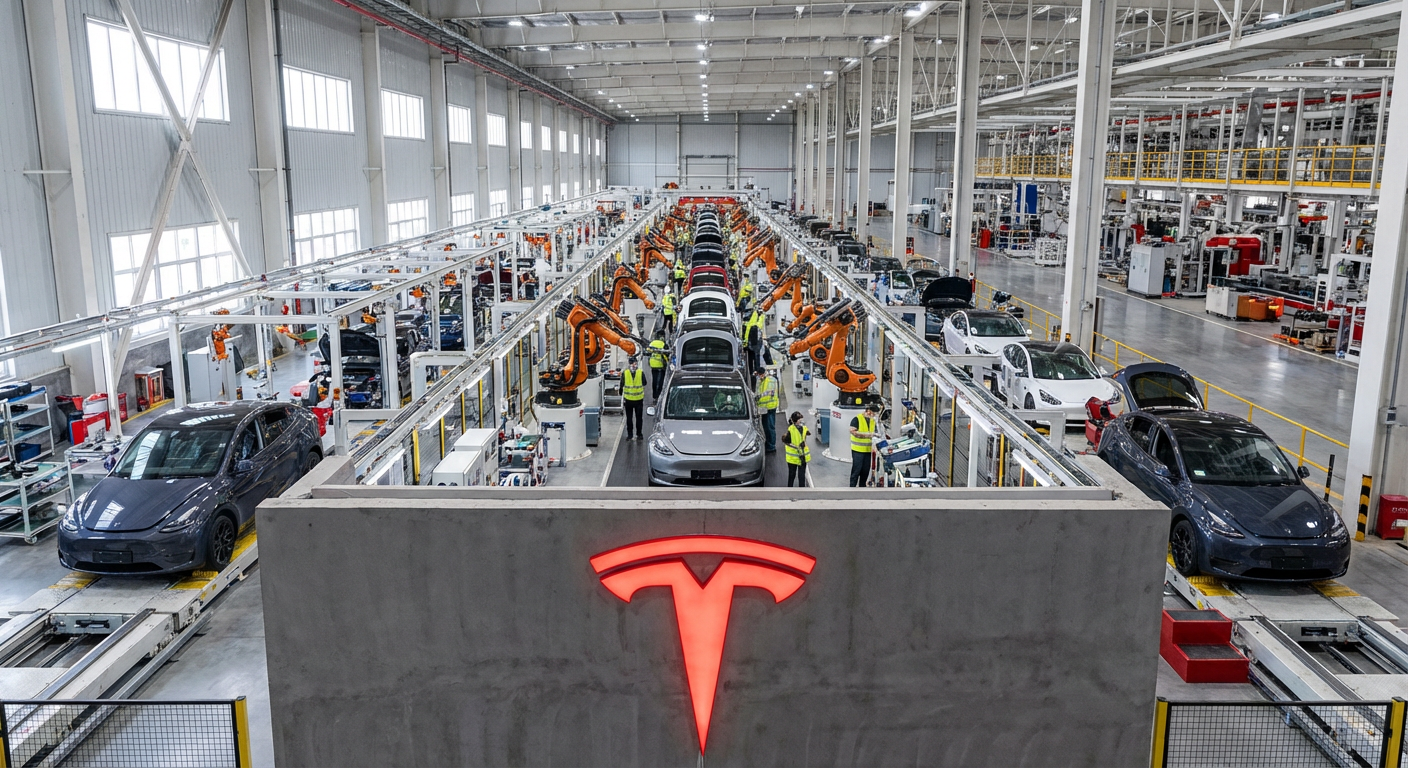
Tesla's decision to increase its spending plan to $25B is a bold move that will have far-reaching consequences for the electric vehicle (EV) market. This significant increase in capex is three times higher than the company's historical spending, and it raises important questions about Tesla's strategy, its impact on the competition, and the potential risks and rewards for investors. As we analyze the details of this move, it becomes clear that Tesla is making a high-stakes bet on its future growth and dominance in the EV market.
Historical Context: The Road to $25B
In 2020, Tesla's capex was around $3.4B, which was a significant increase from the previous year. However, the company's spending has been steadily rising since then, with a focus on expanding its manufacturing capacity, improving its technology, and investing in new products. The new $25B spending plan represents a major acceleration of this trend, and it will likely have a profound impact on the company's financials and its position in the market. For example, in 2022, Tesla's free cash flow was around $7.7B, but with the increased spending, the company's CFO has warned that it will have a negative free cash flow for the rest of the year.
Competitive Analysis: The EV Market Landscape
The EV market is becoming increasingly competitive, with new entrants like Rivian, Lucid, and Fisker challenging Tesla's dominance. However, Tesla's massive spending plan gives it a significant advantage in terms of scale and resources. The company can invest heavily in new technologies, expand its manufacturing capacity, and improve its supply chain, making it harder for rivals to compete. For instance, Tesla's investment in its Gigafactory in Shanghai has enabled the company to increase its production capacity and reduce costs. On the other hand, companies like General Motors and Ford are also investing heavily in EVs, but they may struggle to match Tesla's pace and scale. As a result, we can expect to see a significant consolidation in the EV market, with weaker players struggling to survive.
Second-Order Effects: The Ripple Impact
The impact of Tesla's spending plan will be felt throughout the EV ecosystem. Suppliers will need to scale up their production to meet Tesla's demands, which could lead to shortages and price increases for other manufacturers. Additionally, the increased investment in EV technology will drive innovation and reduce costs, making EVs more competitive with traditional internal combustion engine vehicles. This, in turn, will lead to increased adoption and a further shift in the market towards EVs. For example, the cost of battery packs has fallen by over 80% in the last decade, making EVs more competitive with traditional vehicles.
Technical Deep Dive: The Technology Behind the Spend
Tesla's spending plan is focused on several key areas, including battery technology, autonomous driving, and manufacturing efficiency. The company is investing heavily in its battery technology, including the development of new cell formats and chemistries. This will enable Tesla to improve the range and performance of its vehicles, making them more competitive in the market. Additionally, the company is investing in autonomous driving technology, including the development of its Full Self-Driving (FSD) system. This will enable Tesla to offer advanced autonomous driving capabilities, which will be a key differentiator in the market. For instance, Tesla's FSD system uses a combination of cameras, radar, and ultrasonic sensors to enable advanced autonomous driving capabilities.
Contrarian Take: The Risks of Over-Spending
While Tesla's spending plan is ambitious, it also carries significant risks. The company's negative free cash flow will put pressure on its balance sheet, and the increased debt could limit its flexibility and increase its cost of capital. Additionally, the spending plan is focused on several high-risk, high-reward projects, including the development of new battery technologies and autonomous driving systems. If these projects do not deliver the expected returns, Tesla's financials could be severely impacted. For example, the company's investment in its SolarCity acquisition has not yielded the expected returns, and the company has written off significant amounts of goodwill and other assets.
Builder Perspective: What Founders and Investors Should Do
For founders and investors, Tesla's spending plan offers several key lessons. Firstly, it highlights the importance of scale and resources in the EV market. Companies that can invest heavily in new technologies and manufacturing capacity will have a significant advantage over their rivals. Secondly, it shows the need for a long-term perspective and a willingness to take risks. Tesla's spending plan is a high-stakes bet on the company's future growth and dominance, and it will likely take several years to yield returns. Finally, it emphasizes the importance of financial discipline and a focus on returns. Tesla's negative free cash flow will put pressure on its balance sheet, and the company will need to be careful to manage its finances and deliver returns to investors. For instance, founders should focus on building a strong financial foundation, including a solid balance sheet and a proven business model, before investing heavily in new technologies or expansions.
In conclusion, Tesla's $25B spending plan is a bold move that will have far-reaching consequences for the EV market. While it carries significant risks, it also offers the potential for significant rewards. As the market continues to evolve, we can expect to see a significant shift towards EVs, and companies that can invest in new technologies and manufacturing capacity will be well-positioned to succeed. Our predictions for the future of the EV market include: Tesla will achieve its goal of producing over 1 million vehicles in 2026, the EV market will continue to grow at a rate of over 20% per year, and the cost of battery packs will fall by another 50% in the next 5 years, making EVs even more competitive with traditional vehicles. We also predict that the market will see a significant consolidation, with weaker players struggling to survive, and that companies like Rivian and Lucid will emerge as major players in the EV market.