

Tesla's AI Ambitions Accelerate
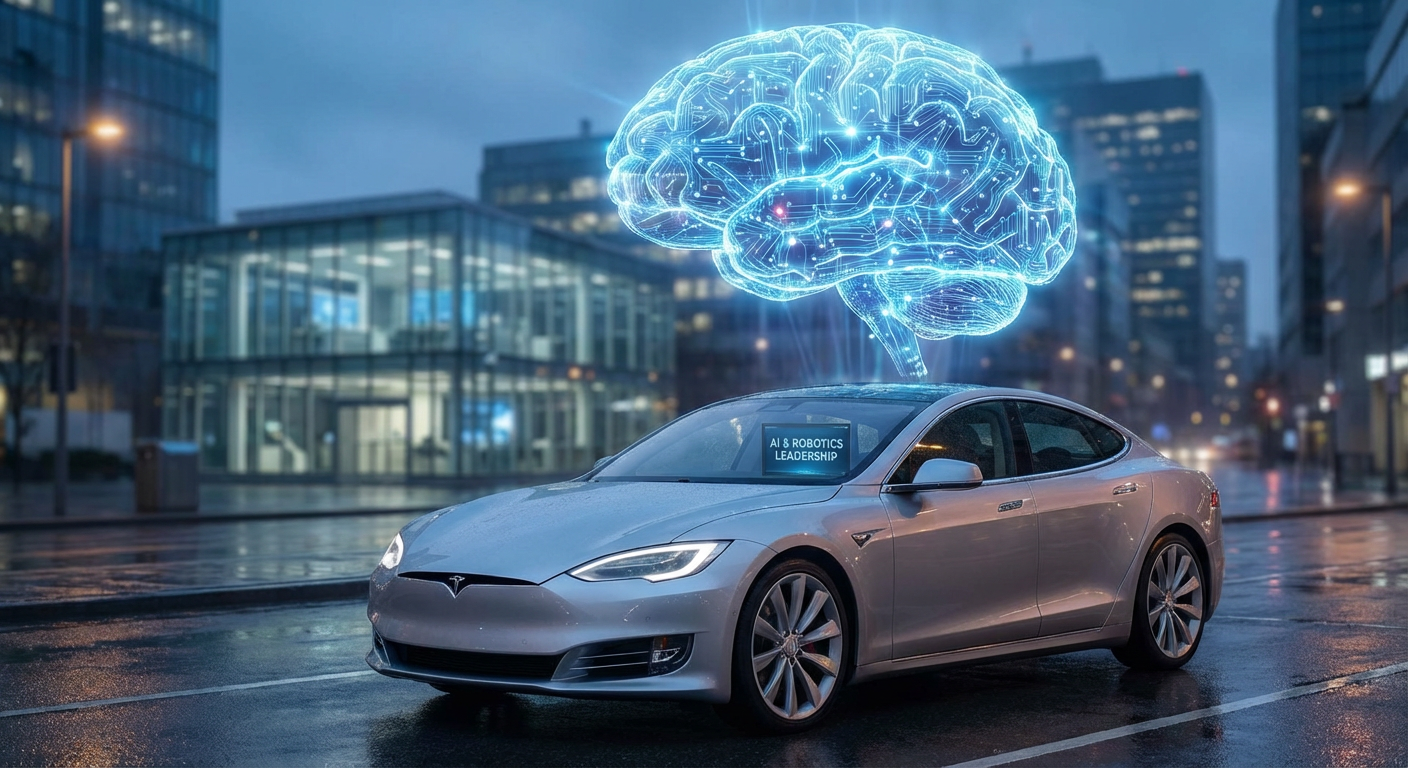
Tesla's latest earnings report is more than just a financial update - it's a sign of the company's accelerating transformation into a leader in AI and robotics. With $22.4 billion in revenue and $477 million in net income, the numbers are undoubtedly impressive, but they only tell part of the story. To understand the true significance of Tesla's Q1 2026 earnings, we need to look at the historical context and competitive implications of the company's AI ambitions.
Historical Context: Tesla's AI Journey
It's been over five years since Tesla first announced its plans to develop autonomous driving technology. In 2020, the company launched its Full Self-Driving (FSD) beta program, which allowed a select group of customers to test the company's advanced driver-assistance systems. Since then, Tesla has made significant progress in developing its AI capabilities, including the acquisition of DeepScale, a computer vision startup, in 2019. The company has also invested heavily in its Autopilot technology, which is now a standard feature in all Tesla vehicles.
Competitive Analysis: The Rise of AI-Powered Autonomous Vehicles
Tesla's AI ambitions are not unique in the automotive industry. Companies like Waymo, Cruise, and Argo AI are also developing autonomous driving technology, but Tesla's approach is distinct. While other companies are focusing on developing Level 4 and Level 5 autonomous vehicles, which can operate without human intervention, Tesla is taking a more incremental approach. The company's FSD technology is designed to be a Level 2+ system, which means it can assist human drivers but still requires their attention and input.
This approach has allowed Tesla to deploy its AI technology more quickly and widely than its competitors. The company's Autopilot system is now used by millions of customers around the world, generating a vast amount of data that can be used to improve the technology. This data advantage is a key factor in Tesla's success, as it allows the company to refine its AI algorithms and develop more advanced features.
Technical Deep Dive: The AI Behind Tesla's Autopilot
So, how does Tesla's Autopilot technology work? The system uses a combination of cameras, radar, ultrasonic sensors, and GPS to detect and respond to its environment. The AI algorithms that power Autopilot are based on a type of machine learning called deep learning, which allows the system to learn from experience and improve over time. Tesla's AI team has developed a range of techniques to improve the performance of its Autopilot system, including the use of simulated data to augment real-world data and the development of more advanced neural network architectures.
One of the key challenges in developing autonomous driving technology is the need to balance competing objectives, such as safety, efficiency, and comfort. Tesla's AI system uses a range of techniques to optimize these objectives, including the use of reinforcement learning to optimize the system's behavior and the development of more advanced control systems to improve the smoothness and responsiveness of the vehicle.
Second-Order Effects: The Future of Autonomous Vehicles
So, what does the future hold for autonomous vehicles? One of the most significant implications of Tesla's AI ambitions is the potential for widespread adoption of autonomous technology in the automotive industry. As Tesla's Autopilot system continues to improve, we can expect to see more companies developing similar technology, which could lead to a significant reduction in accidents and improved traffic flow.
Another potential implication of Tesla's AI ambitions is the development of new business models and revenue streams. The company's FSD technology could enable new types of transportation services, such as autonomous ride-hailing and trucking, which could disrupt traditional industries and create new opportunities for growth.
Forward-Looking Predictions
So, what can we expect from Tesla in the future? Based on the company's Q1 2026 earnings and its AI ambitions, here are a few predictions: Tesla will continue to invest heavily in its AI technology, with a focus on developing more advanced features and capabilities. The company will also expand its FSD beta program to more customers, which will generate even more data and improve the performance of the Autopilot system. Finally, Tesla will face increasing competition from other companies developing autonomous driving technology, which could lead to a range of new partnerships and collaborations in the industry.