

Tesla's Cybercab Conundrum: Why Musk's Caution Signals Deeper Industry Shifts
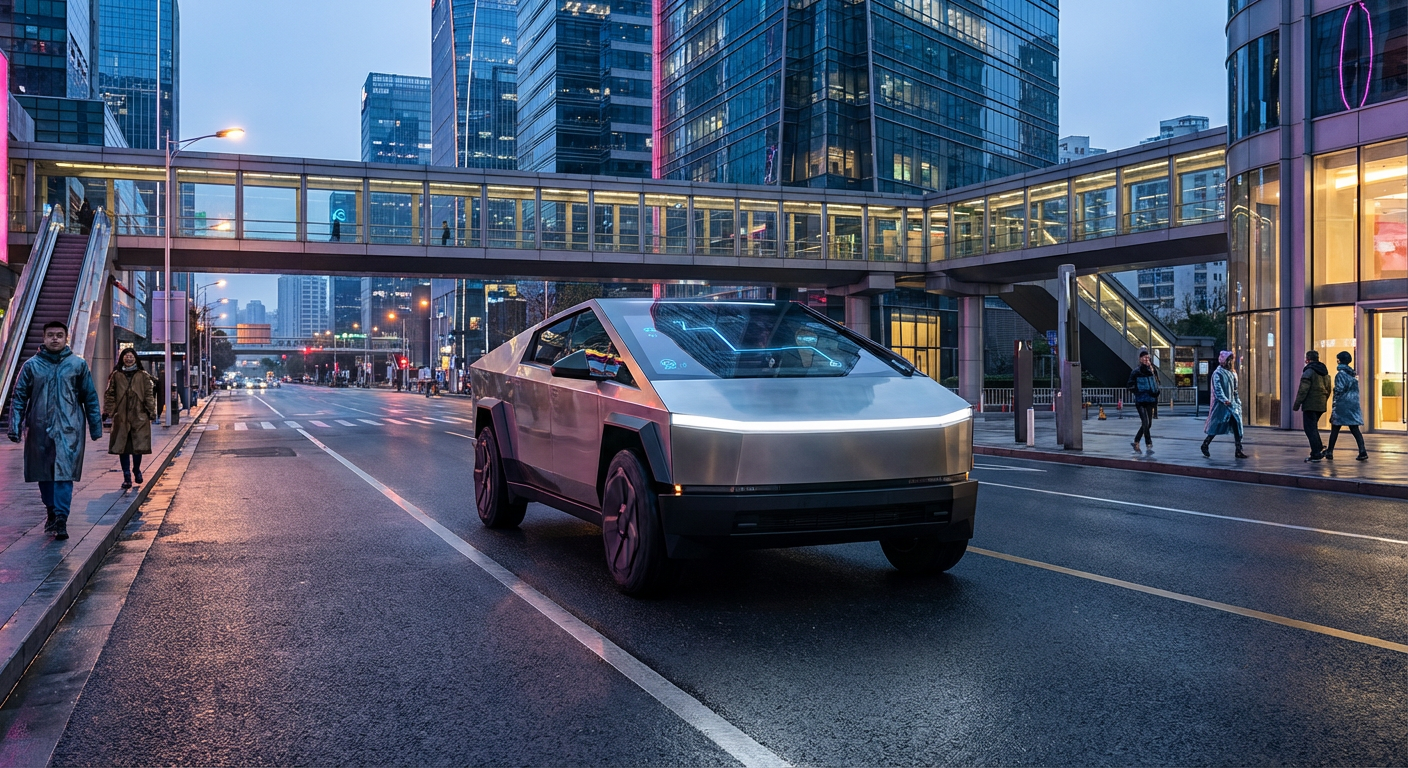
Tesla's Cybercab, the futuristic robotaxi, has finally entered production at the company's Gigafactory in Austin, Texas. However, Elon Musk's uncharacteristic caution surrounding the rollout suggests that there's more to the story than meets the eye. To understand the significance of this development, it's essential to delve into the historical context of autonomous vehicle development, the competitive landscape, and the technical challenges that lie ahead.
Historical Context: The Evolution of Autonomous Vehicles
In 2016, Tesla announced its plans to develop autonomous vehicles, with Musk predicting that fully autonomous cars would be available by 2018. Although the company has made significant progress since then, the development of autonomous vehicles has been more complex and time-consuming than anticipated. The industry has witnessed a series of setbacks, including the fatal accident involving an Uber self-driving car in 2018 and the recent shutdown of Argo AI, a prominent autonomous vehicle startup. These events have led to a more cautious approach, with companies like Waymo and Cruise opting for a more gradual rollout of their autonomous services.
Competitive Analysis: The Autonomous Vehicle Landscape
The autonomous vehicle market is becoming increasingly crowded, with established players like Waymo, Cruise, and Argo AI, as well as newcomers like Zoox and Nuro. Tesla's entry into the market with the Cybercab will undoubtedly disrupt the competitive landscape. However, Musk's caution may be a sign that the company is aware of the significant technical and regulatory hurdles that need to be overcome. The Cybercab's production is a notable achievement, but it's essential to consider the broader implications for the industry. For instance, the success of the Cybercab could lead to increased scrutiny of autonomous vehicle safety and regulation, potentially affecting the entire industry.
Technical Challenges: The Road to Level 5 Autonomy
The development of Level 5 autonomous vehicles, which can operate without human intervention, is a daunting task. The Cybercab's production is a significant milestone, but it's crucial to understand the technical challenges that lie ahead. The vehicle's autonomous system relies on a complex array of sensors, including cameras, lidar, and radar, which must be integrated seamlessly to ensure safe and efficient operation. Furthermore, the development of robust software and machine learning algorithms is essential for the vehicle to navigate complex scenarios and edge cases. The technical challenges are significant, and Musk's caution may be a sign that the company is taking a more measured approach to addressing these issues.
Second-Order Effects: The Impact on the Autonomous Vehicle Ecosystem
The production of the Cybercab will have far-reaching implications for the autonomous vehicle ecosystem. The success of the vehicle could lead to increased investment in autonomous vehicle startups, as well as greater collaboration between industry players. However, it could also lead to increased regulatory scrutiny, potentially affecting the entire industry. Furthermore, the Cybercab's production could disrupt the traditional automotive supply chain, as companies like Tesla and Waymo develop their own autonomous vehicle hardware and software. The second-order effects of the Cybercab's production will be significant, and it's essential to consider the potential consequences for the industry as a whole.
Contrarian Take: The Autonomous Vehicle Market May Not Be as Big as Predicted
Despite the hype surrounding autonomous vehicles, the market may not be as large as predicted. The development of autonomous vehicles is a complex and time-consuming process, and the technical challenges are significant. Furthermore, the regulatory environment is still evolving, and it's unclear how governments will choose to regulate autonomous vehicles. Musk's caution may be a sign that the company is taking a more nuanced view of the market, recognizing that the development of autonomous vehicles will be a gradual process. The autonomous vehicle market may not be the multitrillion-dollar opportunity that some have predicted, and it's essential to take a more measured approach to evaluating the industry's potential.
In conclusion, the production of Tesla's Cybercab is a significant milestone, but it's essential to consider the historical context, competitive implications, and technical challenges that lie ahead. As the industry continues to evolve, it's crucial to take a nuanced view of the autonomous vehicle market, recognizing both the opportunities and the challenges that lie ahead. The future of autonomous vehicles will be shaped by a complex array of technical, regulatory, and market factors, and it's essential to be cautious in our predictions and expectations.
Predictions and Outlook
Based on our analysis, we predict that the autonomous vehicle market will continue to evolve gradually, with significant technical and regulatory hurdles to be overcome. The success of the Cybercab will depend on Tesla's ability to address these challenges, as well as the company's ability to navigate the complex regulatory environment. We expect to see increased investment in autonomous vehicle startups, as well as greater collaboration between industry players. However, we also expect to see increased regulatory scrutiny, potentially affecting the entire industry. Ultimately, the future of autonomous vehicles will be shaped by a complex array of factors, and it's essential to take a nuanced and cautious approach to evaluating the industry's potential.