

Tesla's FSD Limitation: A Strategic Misstep
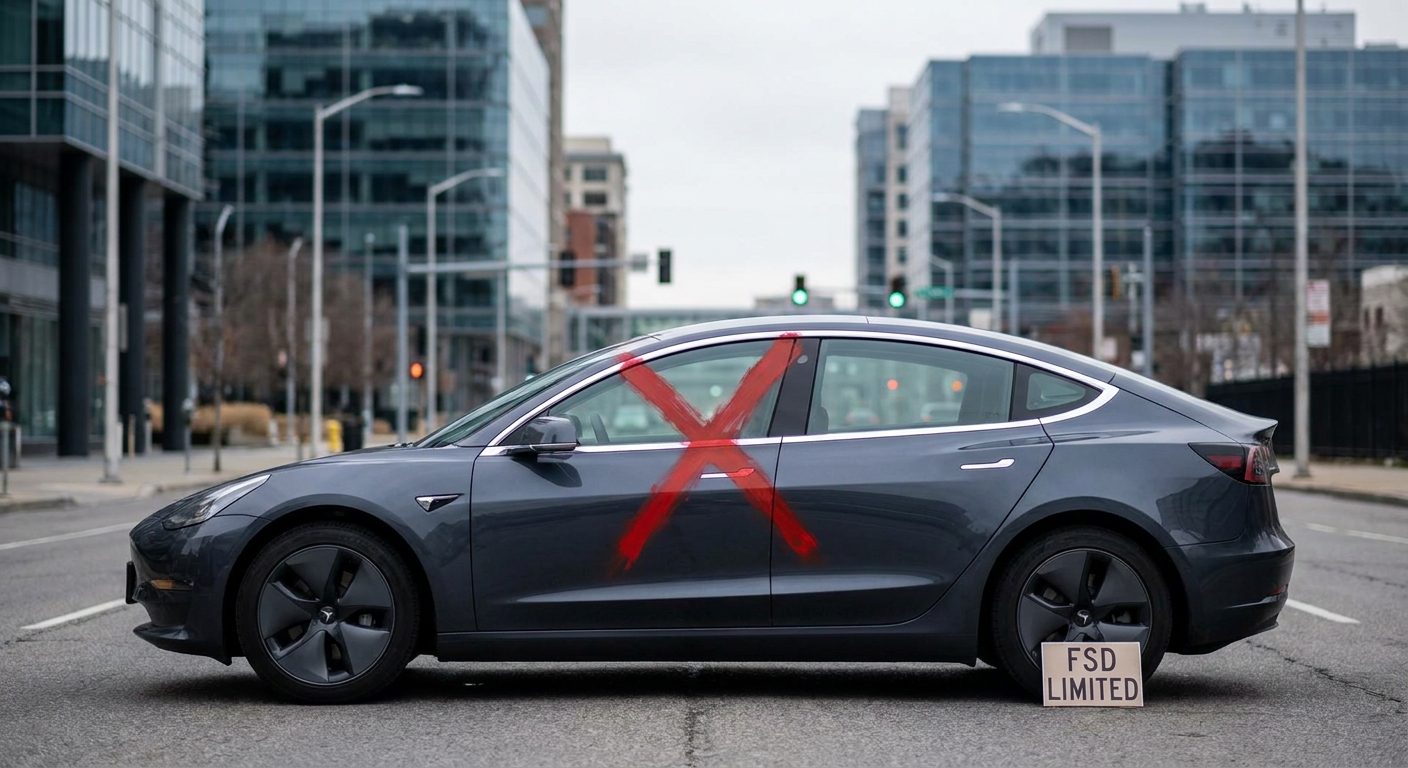
Tesla's recent earnings call revealed a shocking truth: millions of its vehicles, specifically those equipped with the Hardware 3 (HW3) computer, will not receive unsupervised Full Self-Driving (FSD) capabilities. This admission has significant implications for the company, its customers, and the autonomous driving industry as a whole. To understand the gravity of this situation, it's essential to examine the historical context that led to this point.
Historical Context: A Series of Bold Claims
In 2016, Tesla announced its plan to develop autonomous driving capabilities, with Elon Musk claiming that the company's vehicles would be capable of Level 5 autonomy by 2018. This claim was followed by a series of bold statements, including the promise that Tesla's FSD would be available to all its vehicles via over-the-air updates. However, as the years went by, the company's timeline for FSD deployment continued to slip, and the limitations of its technology became increasingly apparent. The HW3 computer, introduced in 2019, was supposed to be the key to unlocking FSD capabilities, but it now seems that this hardware is not sufficient to support truly autonomous driving.
Competitive Implications: A Window of Opportunity
Tesla's admission has significant implications for its competitors in the autonomous driving space. Companies like Waymo, Cruise, and Argo AI have been working on their own autonomous driving technologies, and Tesla's limitation could provide them with a window of opportunity to gain ground. Waymo, in particular, has been making significant progress with its robotaxi service, and its recent partnership with Volvo could further accelerate its development. As Tesla's FSD capabilities are limited, its competitors may be able to gain an edge in the market, potentially attracting customers who are looking for more advanced autonomous driving features.
Technical Deep Dive: The Limitations of HW3
So, what exactly are the limitations of the HW3 computer that prevent it from supporting unsupervised FSD? The answer lies in the computer's processing power and sensor suite. The HW3 computer is based on NVIDIA's Xavier processor, which, while powerful, is not sufficient to handle the complex computations required for truly autonomous driving. Additionally, the sensor suite used in Tesla's vehicles, which includes a combination of cameras, radar, and ultrasonic sensors, may not provide the necessary data to support FSD. In contrast, companies like Waymo and Cruise are using more advanced sensor suites, including lidar, which provides higher-resolution data and enables more accurate object detection and tracking.
Contrarian Take: A Blessing in Disguise
While Tesla's limitation may seem like a significant setback, it could also be a blessing in disguise. By acknowledging the limitations of its technology, Tesla can focus on developing more advanced hardware and software, potentially leading to more significant breakthroughs in the long run. Additionally, the company's admission may help to manage customer expectations, avoiding the kind of backlash that could result from overpromising and underdelivering. As the autonomous driving industry continues to evolve, it's essential to prioritize safety and transparency, and Tesla's decision may ultimately contribute to a more realistic and responsible approach to autonomous driving development.
Forward-Looking Predictions
So, what's next for Tesla and the autonomous driving industry? We predict that Tesla will focus on developing more advanced hardware, potentially including a new computer chip and sensor suite, to support truly autonomous driving. The company may also explore partnerships with other companies, such as NVIDIA or Intel, to accelerate its development. In the short term, we expect Tesla's competitors to gain ground, potentially attracting customers who are looking for more advanced autonomous driving features. However, in the long run, we believe that Tesla's admission will ultimately contribute to a more realistic and responsible approach to autonomous driving development, leading to safer and more reliable autonomous vehicles for everyone.