

Tesla's FSD Upgrades: A Billion-Dollar Bet on Autonomous Futures
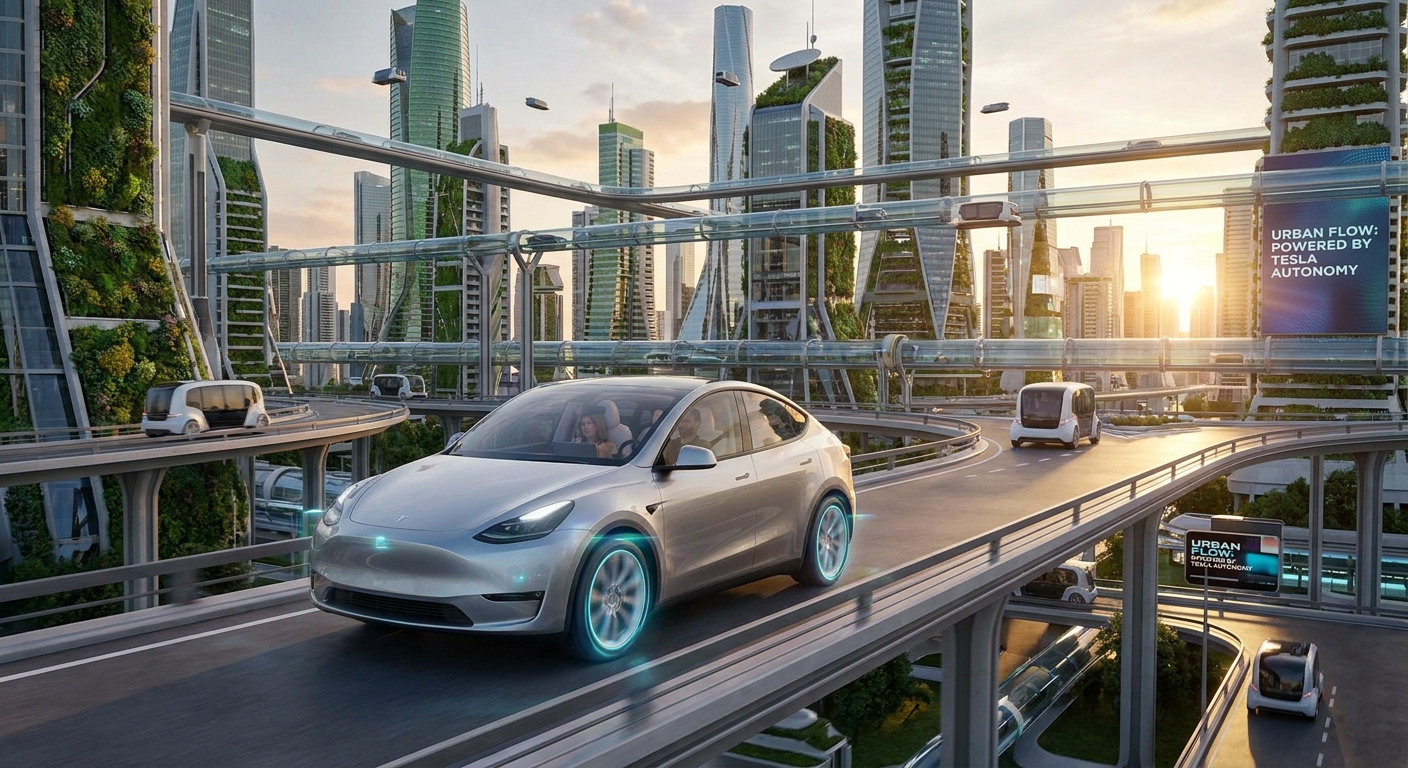
Elon Musk's recent admission that millions of Tesla owners require upgrades to achieve true 'Full Self-Driving' (FSD) capabilities has sent shockwaves throughout the automotive and tech industries. This revelation not only raises questions about Tesla's valuation and investor expectations but also has significant implications for the company's competitive positioning and the broader autonomous vehicle market. As we delve into the historical context, competitive landscape, and potential second-order effects of this development, it becomes clear that Tesla's FSD upgrades represent a billion-dollar bet on autonomous futures.
Historical Context: The Evolution of Tesla's Autopilot and FSD
Tesla's journey towards autonomous driving began in 2015 with the introduction of Autopilot, a semi-autonomous driving system that enabled vehicles to steer, accelerate, and brake within a lane. Over the years, the company has continually updated and expanded Autopilot's capabilities, with the ultimate goal of achieving full autonomy. In 2019, Tesla announced that it would begin rolling out FSD capabilities to its vehicles, with Musk claiming that true autonomy was just a software update away. However, the reality has proven more complex, with regulatory hurdles, technical challenges, and the need for significant hardware upgrades all contributing to delays and setbacks.
Competitive Analysis: The Autonomous Vehicle Landscape
The autonomous vehicle market is becoming increasingly crowded, with established players like Waymo, Cruise, and Argo AI competing with newcomers like Apple and Amazon. Tesla's admission that its vehicles require upgrades for true FSD capabilities gives its rivals an opportunity to capitalize on the company's misstep. Waymo, for example, has been quietly developing its autonomous technology in the background, with a focus on Level 4 autonomy (high automation) rather than Level 5 (full autonomy). This approach may prove more viable in the long run, as it allows for more gradual and incremental progress towards full autonomy. Meanwhile, companies like General Motors and Ford are taking a more cautious approach, focusing on advanced driver-assistance systems (ADAS) rather than full autonomy.
Second-Order Effects: The Ripple Effects of Tesla's FSD Upgrades
The need for FSD upgrades will have significant second-order effects on Tesla's business and the broader autonomous vehicle market. Firstly, the cost of upgrading millions of vehicles will be substantial, with estimates suggesting that it could run into billions of dollars. This will not only impact Tesla's bottom line but also create a new revenue stream for the company. Secondly, the upgrades will require significant investments in manufacturing and supply chain infrastructure, which could lead to delays and bottlenecks. Finally, the admission that FSD capabilities are not yet available will likely lead to a re-evaluation of Tesla's valuation, with some investors questioning the company's ability to deliver on its autonomous promises.
Technical Deep Dive: The Challenges of Achieving Full Autonomy
Achieving full autonomy requires significant advances in computer vision, machine learning, and sensor technology. Tesla's FSD system relies on a combination of cameras, radar, ultrasonic sensors, and GPS to navigate roads and respond to obstacles. However, the complexity of real-world driving scenarios, combined with the need for high levels of accuracy and reliability, makes achieving full autonomy a daunting task. The company's use of a vision-only approach, which relies on cameras to detect and respond to obstacles, has been criticized by some experts, who argue that it is not sufficient for achieving true autonomy. Meanwhile, the development of more advanced sensor technologies, such as lidar, is ongoing, with companies like Waymo and Argo AI investing heavily in these areas.
Forward-Looking Predictions: The Future of Autonomous Vehicles
As the autonomous vehicle market continues to evolve, we can expect significant developments in the coming years. Firstly, the rollout of FSD upgrades will be a major catalyst for the adoption of autonomous technology, with millions of Tesla owners gaining access to advanced autonomous capabilities. Secondly, the competition between established players and newcomers will drive innovation and investment in the sector, leading to significant advances in autonomous technology. Finally, regulatory frameworks will play a critical role in shaping the future of autonomous vehicles, with governments around the world grappling with the challenges of regulating this emerging technology. Our predictions for the future of autonomous vehicles include: (1) the widespread adoption of Level 4 autonomy by 2025, (2) the emergence of new business models, such as autonomous taxi services, and (3) significant investments in autonomous technology by established players and newcomers alike.