

Tesla's Self-Driving Conundrum: A Technical and Strategic Analysis
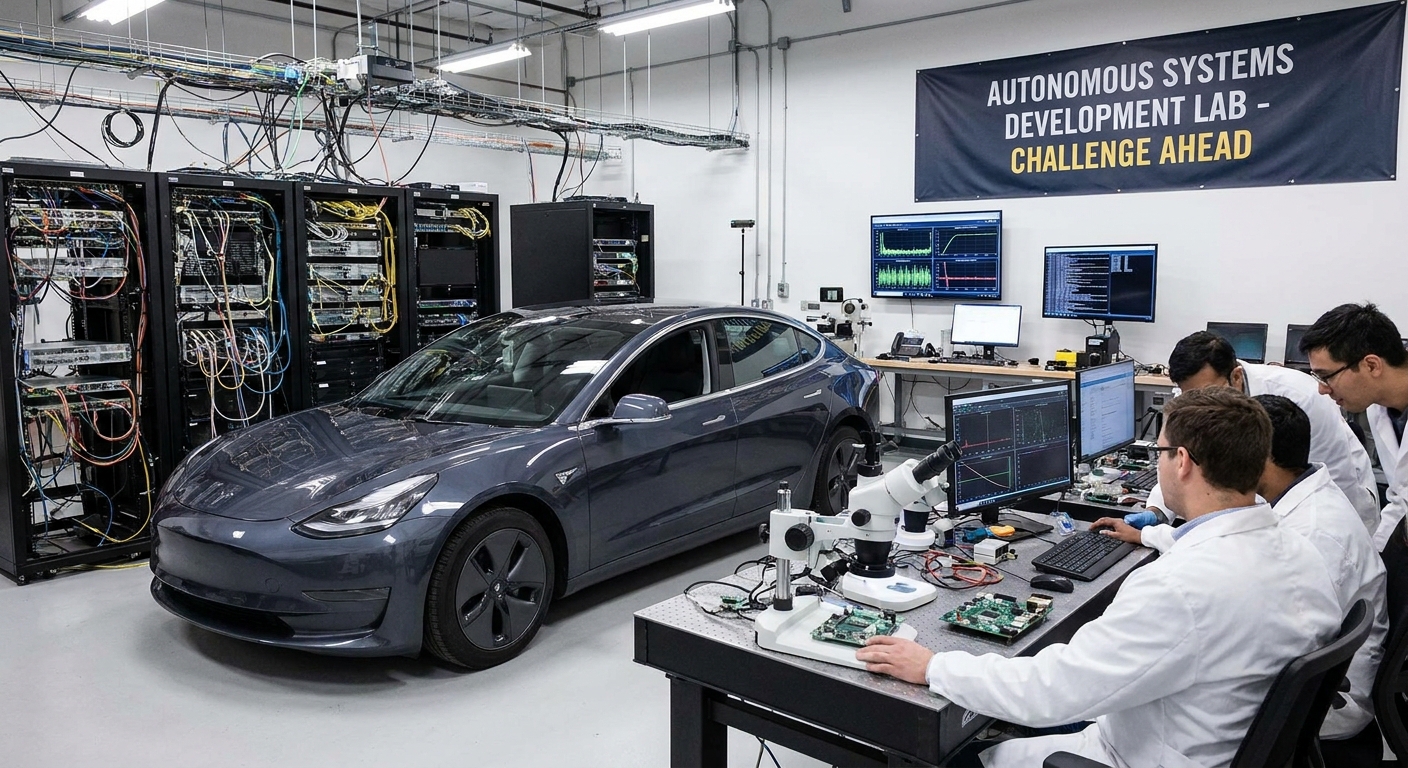
Tesla's announcement that it will fix 2019-2023 vehicles that can't fully self-drive is a significant development in the company's quest for autonomous vehicle supremacy. This move not only underscores the technical challenges Tesla faces in delivering on its Full Self-Driving (FSD) promise but also highlights the strategic implications for the company and its competitors.
Historical Context: A Brief History of Tesla's Autonomous Ambitions
Tesla's autonomous vehicle journey began in 2015 with the introduction of Autopilot, a semi-autonomous driving system that enabled vehicles to steer, accelerate, and brake on their own. Over the years, the company has incrementally improved Autopilot, adding features like lane changing and adaptive cruise control. However, the transition to FSD has proven more challenging. In 2019, Tesla introduced Hardware 3, a custom-designed computer chip specifically designed to handle the complex computations required for FSD. Despite this, the company has struggled to deliver on its FSD promise, with many owners of Hardware 3-equipped vehicles still waiting for the feature to be enabled.
Competitive Analysis: The Autonomous Vehicle Landscape
Tesla's struggles with FSD have created an opening for competitors like Waymo, Cruise, and Argo AI to gain ground in the autonomous vehicle market. These companies have taken a more incremental approach to autonomy, focusing on specific use cases like ride-hailing and trucking. In contrast, Tesla's all-or-nothing approach to FSD has left it vulnerable to criticism and regulatory scrutiny. The company's decision to fix 2019-2023 vehicles that can't fully self-drive may help to mitigate some of this criticism, but it also highlights the significant technical and strategic challenges Tesla faces in delivering on its autonomous vision.
Technical Deep Dive: The Challenges of FSD
The technical challenges of FSD are significant, and Tesla's struggles are not unique. The company's Hardware 3 chip, while powerful, may not be sufficient to handle the complex computations required for FSD. The transition to Hardware 4, which began in early 2023, may help to address some of these challenges, but it also raises questions about the upgrade path for existing vehicles. Furthermore, the software challenges of FSD are equally significant, requiring the development of sophisticated machine learning algorithms and sensor fusion systems. Tesla's decision to fix 2019-2023 vehicles that can't fully self-drive may require significant software and hardware upgrades, which could be costly and time-consuming to implement.
Market Structure Analysis: The Implications for Tesla and its Competitors
The implications of Tesla's decision to fix 2019-2023 vehicles that can't fully self-drive are significant for both the company and its competitors. For Tesla, the move may help to restore customer trust and confidence in the company's autonomous vehicle capabilities. However, it also highlights the significant technical and strategic challenges the company faces in delivering on its FSD promise. For competitors like Waymo and Cruise, Tesla's struggles create an opportunity to gain ground in the autonomous vehicle market. These companies may be able to leverage their more incremental approach to autonomy to deliver more targeted and effective solutions, potentially undermining Tesla's market lead.
Forward-Looking Predictions: The Future of Autonomous Vehicles
So what does the future hold for Tesla and the autonomous vehicle industry? In the short term, we expect Tesla to continue to face significant technical and strategic challenges in delivering on its FSD promise. The company's decision to fix 2019-2023 vehicles that can't fully self-drive may help to mitigate some of these challenges, but it also highlights the significant investments required to deliver on FSD. In the long term, we predict that the autonomous vehicle market will become increasingly fragmented, with different companies focusing on specific use cases and applications. Tesla's all-or-nothing approach to FSD may ultimately prove to be a liability, as competitors with more targeted and effective solutions gain ground in the market. By 2025, we expect to see significant advancements in autonomous vehicle technology, with multiple companies deploying FSD-capable vehicles in targeted applications like ride-hailing and trucking.