

eVTOL Pilot Programs Are Here. The Hard Part Starts Now
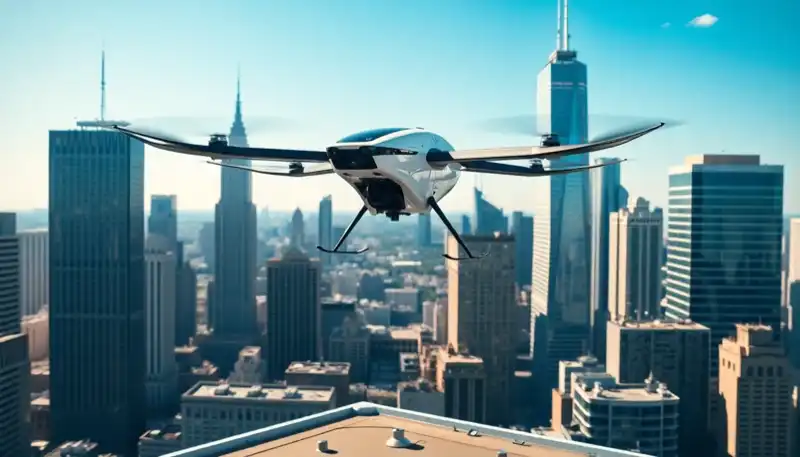
The U.S. Department of Transportation just approved eight pilot programs that will put electric air taxis in the skies above 26 states as early as this summer. Joby Aviation, Archer Aviation, and Beta Technologies are among the companies cleared to begin real-world operations under the new eVTOL Integration Pilot Program, or eIPP. It is a genuine milestone, the culmination of a regulatory process that has stretched across three presidential administrations. But the celebration obscures a harder truth: getting permission to fly was never the bottleneck. Building an industry that can actually sustain commercial flight at scale is an entirely different engineering problem, and it is one that no pilot program can solve.
A Decade of Regulatory Catch-Up
To understand why this moment matters, you need to understand how long it took to arrive. The FAA first began grappling with the powered-lift aircraft category in 2019, when Joby and a handful of other startups were still flying subscale prototypes. The fundamental problem was absurd in its simplicity: no existing regulatory framework covered an aircraft that takes off like a helicopter and flies like a plane. Powered-lift vehicles did not fit Part 23 (small airplanes), Part 25 (transport category), or Part 27 (rotorcraft). The FAA had to build a new certification pathway from scratch.
That process consumed years. In 2022, Congress passed legislation directing the FAA to establish powered-lift certification standards. By 2024, the agency had published proposed rules, but the comment period and revision cycle dragged into 2025. The final powered-lift certification rule was not published until March 27, 2026, just days after the DOT announced the eight pilot selections. The timing was not coincidental. The regulatory apparatus moved in lockstep: create the rules, then immediately create the sandbox for companies to operate under them.
Meanwhile, the companies themselves were burning through capital at extraordinary rates. Joby, which went public via SPAC in 2021 at an enterprise value north of $6 billion, has spent the intervening years pouring cash into flight testing, manufacturing buildout, and the grueling five-stage FAA certification process. The company reached Stage 4 of that process in late 2025 and began testing its first production-conforming aircraft in Marina, California. Archer followed a parallel track, securing FAA acceptance of its Means of Compliance documentation in January 2026. Both companies have been in a race not just against each other, but against their own burn rates.
The Infrastructure Problem Nobody Wants to Price
The eIPP is designed to generate operational data across diverse use cases: urban air taxi service, cargo delivery, emergency medical response. The Port Authority of New York and New Jersey will explore 12 operational concepts, including electric air taxi connections between the Manhattan Heliport and regional airports. Texas will support a regional network linking Dallas, Austin, San Antonio, and Houston. These are ambitious visions. They are also visions that depend on infrastructure that does not yet exist.
A vertiport is not a helipad with a power outlet. According to a joint NREL and FAA study, a single high-throughput vertiport operating a fleet of eVTOL aircraft requires megawatt-scale electrical infrastructure. Charging a battery large enough to carry four passengers and a pilot across a 60-mile range in the 10 to 15 minutes needed for commercially viable turnaround times demands power levels comparable to a small industrial facility. Multiply that across the dozens of vertiports needed to create a functional network in a single metro area, and you are talking about grid upgrades that require years of permitting and construction by themselves.
The land use challenge is equally daunting. Urban cores, where demand for air taxi service is highest, are precisely the places where real estate is most expensive and zoning most restrictive. New York City has exactly one public heliport in Manhattan. Adding even a handful of vertiport locations would require navigating community opposition, environmental review, and city council politics that make FAA certification look straightforward by comparison. The companies know this. Joby has strategically targeted Dubai for its first commercial operations in part because the regulatory and real estate environment in the UAE is far more accommodating than any American city.
The pilot programs will use existing infrastructure wherever possible, repurposing helipads, airports, and military facilities. This is pragmatic for data collection, but it sidesteps the core question: can you build the ground network needed for a viable commercial service?
Joby vs. Archer: A Tale of Two Burn Rates
The competitive dynamics between the two leading American eVTOL companies reveal how different strategies produce very different risk profiles. Joby has pursued vertical integration with almost religious conviction. The company manufactures its own aircraft, develops its own flight software, and intends to operate its own air taxi service. This approach mirrors early Tesla, absorbing enormous capital costs in exchange for control over every variable in the customer experience. Toyota's backing provides a financial cushion: Joby entered 2026 with nearly $1 billion in liquidity.
Archer has taken a more capital-efficient path, at least in theory. The company's Midnight aircraft is designed for high-throughput back-to-back flights on short urban routes, prioritizing utilization rate over range. Archer has also pursued manufacturing partnerships and pre-sale agreements rather than building everything in-house. But capital efficiency has not translated into market confidence. Archer's stock has fallen roughly 20 percent since the start of 2026, while Joby's has climbed. Archer's market capitalization sits around $3.7 billion, compared to Joby's $13.2 billion. The market is pricing Joby's vertical integration and deeper certification progress as more valuable than Archer's leaner approach.
This valuation gap matters because both companies will need to raise additional capital before reaching profitability. Neither has meaningful revenue. Joby's stronger stock price gives it a cheaper equity financing option, which in turn funds more flight testing, which generates more certification progress, which supports the stock price. It is a virtuous cycle that Archer is struggling to match. The eIPP approval helps both companies by providing regulatory legitimacy and operational data, but it helps Joby more because Joby is better positioned to capitalize on the momentum.
Beta Technologies, the Vermont-based company that has pursued a cargo and logistics strategy rather than passenger service, represents a third path that deserves more attention than it gets. Beta's aircraft are designed for longer ranges and simpler operational profiles. Cargo does not complain about noise, does not require passenger safety certifications, and does not need vertiports in downtown Manhattan. If the economics of urban air taxis prove more challenging than projected, Beta's quieter approach to the market could end up being the most commercially viable.
The Unit Economics Do Not Work Yet
The fundamental challenge facing every eVTOL company is not technology, regulation, or even infrastructure. It is unit economics. An electric air taxi carrying four passengers needs to achieve utilization rates comparable to a commercial helicopter while charging fares competitive with ground transportation alternatives. The math is punishing.
Consider a 30-mile trip from Manhattan to JFK Airport. An UberX costs roughly $50 to $80 and takes 45 to 90 minutes depending on traffic. For an air taxi to compete on price, it would need to charge something in the $100 to $200 range, which is roughly the price point most companies have targeted. But to make that fare profitable, the aircraft needs to complete a high number of flights per day, which requires fast turnaround charging, minimal weather-related cancellations, and a network dense enough that deadhead flights (flying empty to reposition) are rare.
Battery degradation adds another layer of cost. Lithium-ion cells lose capacity with each charge cycle, and the aggressive fast-charging needed for commercial turnaround accelerates that degradation. Battery replacement is not a minor maintenance item. It is potentially the single largest operating cost for the aircraft over its lifetime. No eVTOL company has published credible data on battery replacement intervals or costs at scale, because none of them have operated at scale.
Pilot costs are another factor that the industry prefers to discuss in the future tense. Every eVTOL aircraft operating under the eIPP will require a licensed pilot. Autonomous flight is a technical possibility but a regulatory impossibility for the foreseeable future. Pilot compensation in commercial aviation has risen sharply since 2022, driven by airline hiring demand and a structural pilot shortage. eVTOL operators will compete for the same talent pool, and the novelty of flying an electric aircraft will not substitute for competitive pay.
The honest assessment is that eVTOL air taxis will launch as a premium service for business travelers and affluent commuters, not as a mass transit alternative. That is fine as a starting point. Smartphones started as luxury devices too. But the companies and their investors need to be clear-eyed about the timeline from premium service to mass market. It is measured in decades, not years.
What Happens Next: Three Predictions
First, Joby will achieve FAA type certification before the end of 2026, becoming the first eVTOL company to do so in the United States. The company's Stage 4 progress, production-conforming test aircraft, and regulatory momentum all point in this direction. Archer will follow in the first half of 2027. Certification will trigger a wave of investor enthusiasm that temporarily obscures the operational challenges ahead.
Second, the infrastructure bottleneck will become the dominant story by mid-2027. The pilot programs will demonstrate that the aircraft work. They will also demonstrate that the ground infrastructure does not exist at the density needed for commercial viability. Expect a pivot toward public-private partnerships and federal infrastructure funding, echoing the early days of electric vehicle charging networks. The companies that secure vertiport real estate and grid connections earliest will have a durable competitive advantage that matters more than aircraft performance specs.
Third, consolidation is coming. The eVTOL sector currently has dozens of companies pursuing certification globally, from Lilium in Europe to Volocopter in Germany to EHang in China. Most of them will not survive to commercial operations. The capital requirements for certification, manufacturing, infrastructure, and sustained pre-revenue operations are simply too large for the market to support more than three or four viable players globally. The DOT's pilot program, by concentrating regulatory attention and operational data on a handful of American companies, effectively picks the domestic winners. Everyone else is flying on borrowed time.
The approval of these eight pilot programs is real progress. It represents the U.S. government making a concrete bet that urban air mobility is not science fiction. But progress and success are different things. The aircraft can fly. The regulations now exist. The question that matters, the one these pilot programs are designed to answer, is whether anyone can build a business around it. The next three years will determine whether eVTOL becomes the next great transportation platform or the next great capital destruction event. The smart money is watching the vertiports, not the aircraft.