

Astra Revolutionizes Robot Navigation
Illustration, not documentary evidence of the event.
ByteDance's introduction of Astra, a dual-model architecture for autonomous robot navigation, marks a significant milestone in the development of robots that can efficiently navigate complex indoor environments. This innovation has the potential to transform various industries, from logistics and healthcare to hospitality and education. But what exactly does Astra bring to the table, and how will it impact the future of autonomous robots? Astra offers additional context on this topic.
Technical Deep Dive
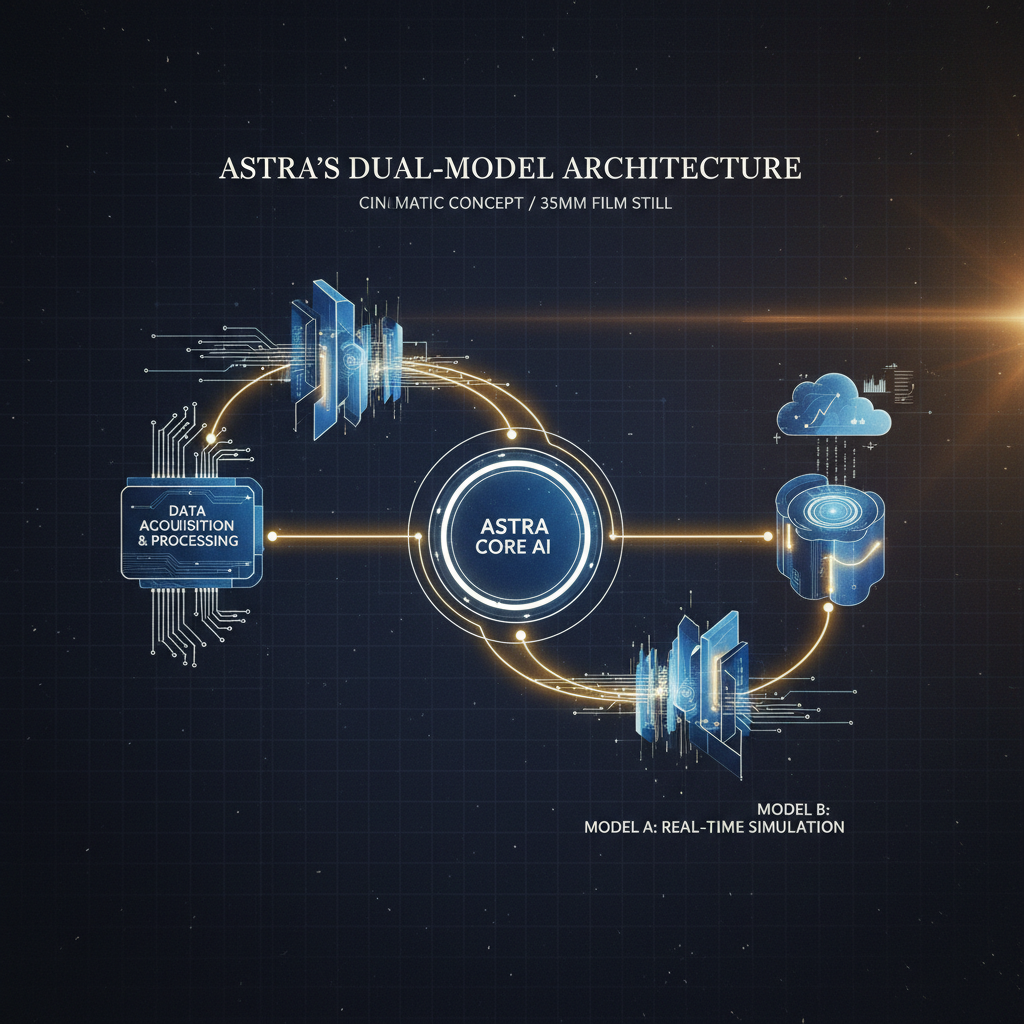
Astra's dual-model architecture combines the strengths of two distinct models: a semantic mapping model and a geometric mapping model. The semantic mapping model focuses on understanding the environment's semantic meaning, such as identifying objects, rooms, and corridors, while the geometric mapping model concentrates on building an accurate geometric representation of the space. By integrating these two models, Astra achieves a more comprehensive understanding of the environment, enabling robots to navigate complex indoor spaces with enhanced accuracy and efficiency. Astra offers additional context on this topic.
The semantic mapping model utilizes a graph-based approach, where objects and locations are represented as nodes and edges, allowing the robot to reason about the environment's topology. In contrast, the geometric mapping model employs a grid-based approach, dividing the space into a series of occupancy grids that provide a detailed representation of the environment's geometry. The fusion of these two models enables Astra to leverage the strengths of both, resulting in a more robust and flexible navigation system.
Industry Impact
The introduction of Astra is expected to have a significant impact on the autonomous robot industry, as it addresses one of the most pressing challenges: navigating complex indoor environments. With Astra, robots can now efficiently map and navigate spaces with varying levels of complexity, from simple corridors to intricate layouts. This advancement will enable the widespread adoption of autonomous robots in various industries, such as logistics, healthcare, and hospitality, where efficient navigation is crucial. autonomous robots offers additional context on this topic.
Competitors, such as Amazon Robotics and Google's Everyday Robots, will need to reassess their navigation strategies in light of Astra's dual-model architecture. The ability to accurately and efficiently navigate complex indoor environments will become a key differentiator in the market, and companies that fail to adapt may struggle to remain competitive. Meanwhile, startups and research institutions will likely be inspired by Astra's innovative approach, leading to a surge in new research and development in the field of autonomous robot navigation.
Market Structure Analysis
The introduction of Astra will likely lead to a shift in the market structure of the autonomous robot industry. As robots become more capable of navigating complex indoor environments, the demand for autonomous robots will increase, driving growth in the market. However, this growth will also lead to increased competition, as new entrants and established players alike will seek to capitalize on the opportunities presented by Astra's dual-model architecture.
One potential consequence of this increased competition is a decrease in prices, as companies seek to differentiate themselves through cost-effectiveness. This, in turn, could lead to a wider adoption of autonomous robots, as they become more accessible to a broader range of industries and applications. Furthermore, the development of Astra may also lead to new business models, such as robot-as-a-service, where companies offer autonomous robots as a service, rather than a product, to customers.
Builder Perspective
For builders and operators of autonomous robots, Astra's introduction presents both opportunities and challenges. On the one hand, the dual-model architecture offers a more efficient and accurate navigation system, enabling robots to operate in a wider range of environments. On the other hand, the complexity of Astra's architecture may require significant updates to existing systems and infrastructure.
To take advantage of Astra's capabilities, builders and operators should focus on developing robust and flexible software frameworks that can integrate with the dual-model architecture. This may involve investing in research and development, as well as collaborating with other companies and research institutions to stay at the forefront of the field. Additionally, builders and operators should consider the potential applications of Astra in various industries and develop strategies to address the unique challenges and opportunities presented by each.
Frequently Asked Questions
How does Astra compare to other navigation systems?
Astra's dual-model architecture sets it apart from other navigation systems, which often rely on a single model or approach. By combining semantic and geometric mapping, Astra achieves a more comprehensive understanding of the environment, enabling robots to navigate complex indoor spaces with enhanced accuracy and efficiency. While other systems may excel in specific areas, Astra's flexibility and robustness make it a strong contender in the market.
What does this mean for developers using ROS (Robot Operating System)?
For developers using ROS, Astra's introduction presents an opportunity to leverage the dual-model architecture and enhance the navigation capabilities of their robots. ROS provides a flexible and widely adopted framework for building autonomous robots, and Astra's architecture can be integrated with ROS to create more efficient and accurate navigation systems. Developers should explore the possibilities of combining Astra with ROS to create more robust and capable autonomous robots.
Can Astra be applied to outdoor environments?
While Astra is specifically designed for indoor environments, its dual-model architecture can be adapted for outdoor use. However, outdoor environments present unique challenges, such as varying lighting conditions, dynamic obstacles, and larger-scale spaces. To apply Astra to outdoor environments, significant modifications would be required, including the development of more robust semantic and geometric mapping models that can handle the complexities of outdoor spaces.
How will Astra impact the job market for robotics engineers?
The introduction of Astra will likely lead to an increased demand for robotics engineers with expertise in navigation and mapping. As companies seek to develop and implement Astra-based systems, they will require skilled engineers who can design, develop, and integrate the dual-model architecture. This may lead to new job opportunities and career paths for robotics engineers, as well as a shift in the skills and expertise required for the field.
In conclusion, ByteDance's introduction of Astra marks a significant milestone in the development of autonomous robots. With its dual-model architecture, Astra has the potential to transform various industries and revolutionize the field of robot navigation. As the industry continues to evolve, it is crucial for builders, operators, and developers to stay at the forefront of innovation and adapt to the changing landscape. The future of autonomous robots is exciting and full of possibilities, and Astra is poised to play a major role in shaping that future.