

Robotics Revolutionizing Sports: Ace Sets the Bar
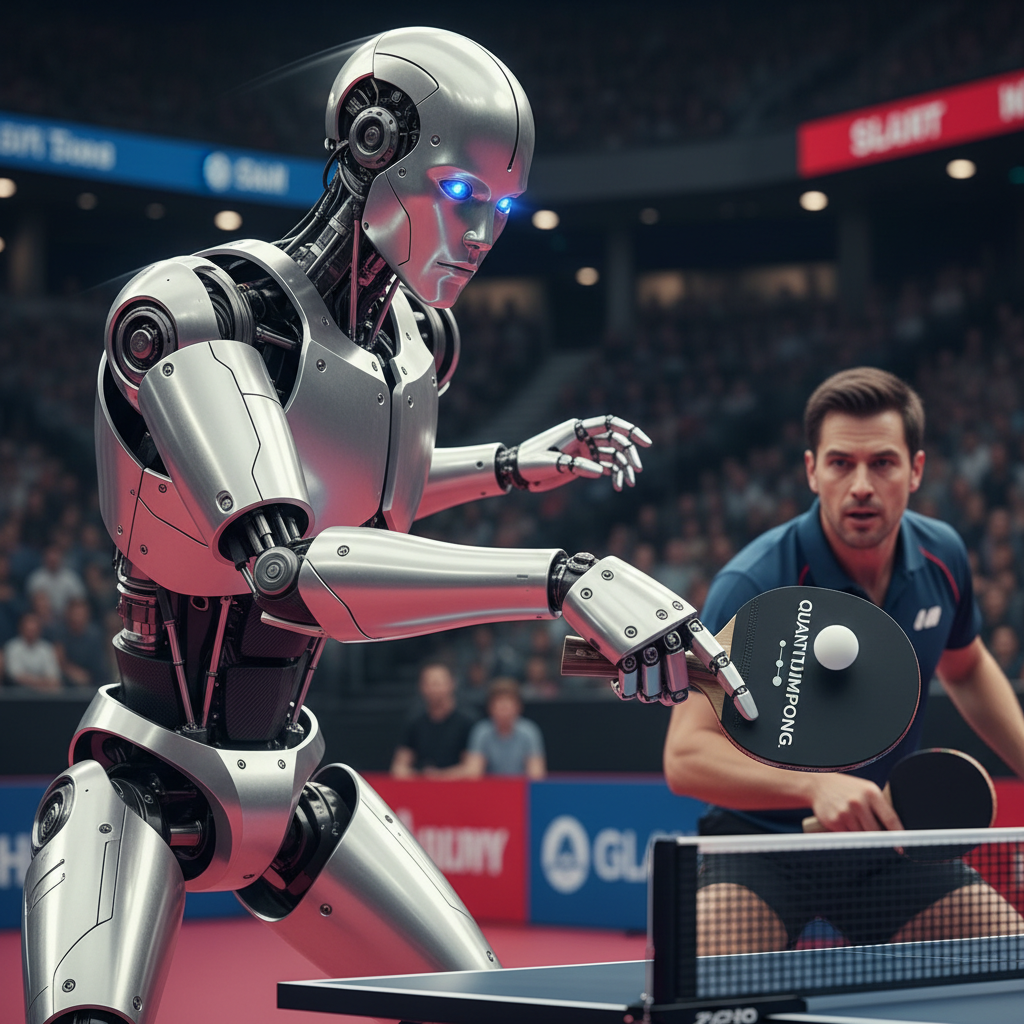
The recent unveiling of Ace, a robot capable of reading the trajectory of a ping-pong ball and responding with precise strokes, marks a significant milestone in the convergence of sports and technology. This innovation has far-reaching implications, from revolutionizing athlete training to redefining the boundaries of human-machine competition. To fully appreciate the significance of Ace, it's essential to consider the historical context of robotics in sports and the competitive landscape of table tennis.
Historical Context: The Evolution of Robotics in Sports
Over the past decade, we've witnessed a steady increase in the use of robotics and artificial intelligence in various sports. For instance, in 2018, the robotic tennis ball launcher, Slinger, was introduced, allowing players to practice their shots with precision and consistency. Similarly, in 2020, the robotic soccer player, RoboCup, demonstrated its ability to play a game of soccer with human-like agility. These developments have paved the way for more sophisticated robots like Ace, which can engage in complex, high-speed games like table tennis. Our robotics analysis explores this further.
Competitive Analysis: The Impact on Table Tennis and Beyond
Ace's capabilities will undoubtedly disrupt the table tennis landscape, as professional players will need to adapt to a new level of competition. The robot's ability to read and respond to the ball's trajectory will force human players to develop new strategies and techniques to counter its precision. This, in turn, will lead to a new era of innovation in table tennis, with players and coaches leveraging data analytics and AI-powered tools to gain a competitive edge. Moreover, the success of Ace will likely inspire the development of similar robots in other sports, such as badminton, squash, and even tennis, further accelerating the convergence of sports and technology.
Technical Deep Dive: The Science Behind Ace's Precision
Ace's impressive performance can be attributed to its advanced computer vision system, which enables it to track the ball's movement and predict its trajectory. This is achieved through a combination of high-speed cameras, machine learning algorithms, and sophisticated software that processes the visual data in real-time. The robot's racket is also equipped with advanced sensors and actuators, allowing it to adjust its angle and respond to the ball with precision. The technical complexity of Ace's design and functionality underscores the significant advancements being made in the field of robotics and AI, with potential applications extending far beyond the realm of sports.
Second-Order Effects: The Future of Human-Machine Competition
The emergence of Ace and similar robots will have far-reaching consequences for the future of human-machine competition. As robots become increasingly sophisticated, we can expect to see a new era of collaboration and competition between humans and machines. This will lead to the development of new sports and games that leverage the unique capabilities of both humans and robots, such as hybrid teams consisting of human and robotic players. Furthermore, the data generated by these competitions will provide valuable insights into human and machine performance, driving innovation in fields like AI, robotics, and sports science. Related: robotics.
Builder Perspective: Opportunities and Challenges for Innovators
The success of Ace presents a compelling opportunity for innovators and entrepreneurs to develop new products and services that leverage the convergence of sports and technology. However, this also poses significant challenges, as the development of sophisticated robots like Ace requires substantial investments in research and development, as well as expertise in areas like computer vision, machine learning, and robotics. To capitalize on this trend, founders and engineers should focus on developing innovative solutions that address specific pain points in the sports industry, such as athlete training, fan engagement, and sports analytics. Related: robotics.
Forward-Looking Predictions: The Future of Sports Tech
As we look to the future, it's clear that the emergence of Ace and similar robots will have a profound impact on the sports tech landscape. Within the next five years, we can expect to see the development of more sophisticated robots that can compete with humans in a variety of sports. This will lead to a new era of innovation, with significant advancements in areas like AI, robotics, and sports science. By 2025, we predict that human-machine competitions will become a staple of the sports industry, with hybrid teams and robot-only leagues emerging as new and exciting forms of entertainment. As the boundaries between humans and machines continue to blur, one thing is certain – the future of sports will be shaped by the convergence of technology and human ingenuity.