

Ransomware Goes Quantum
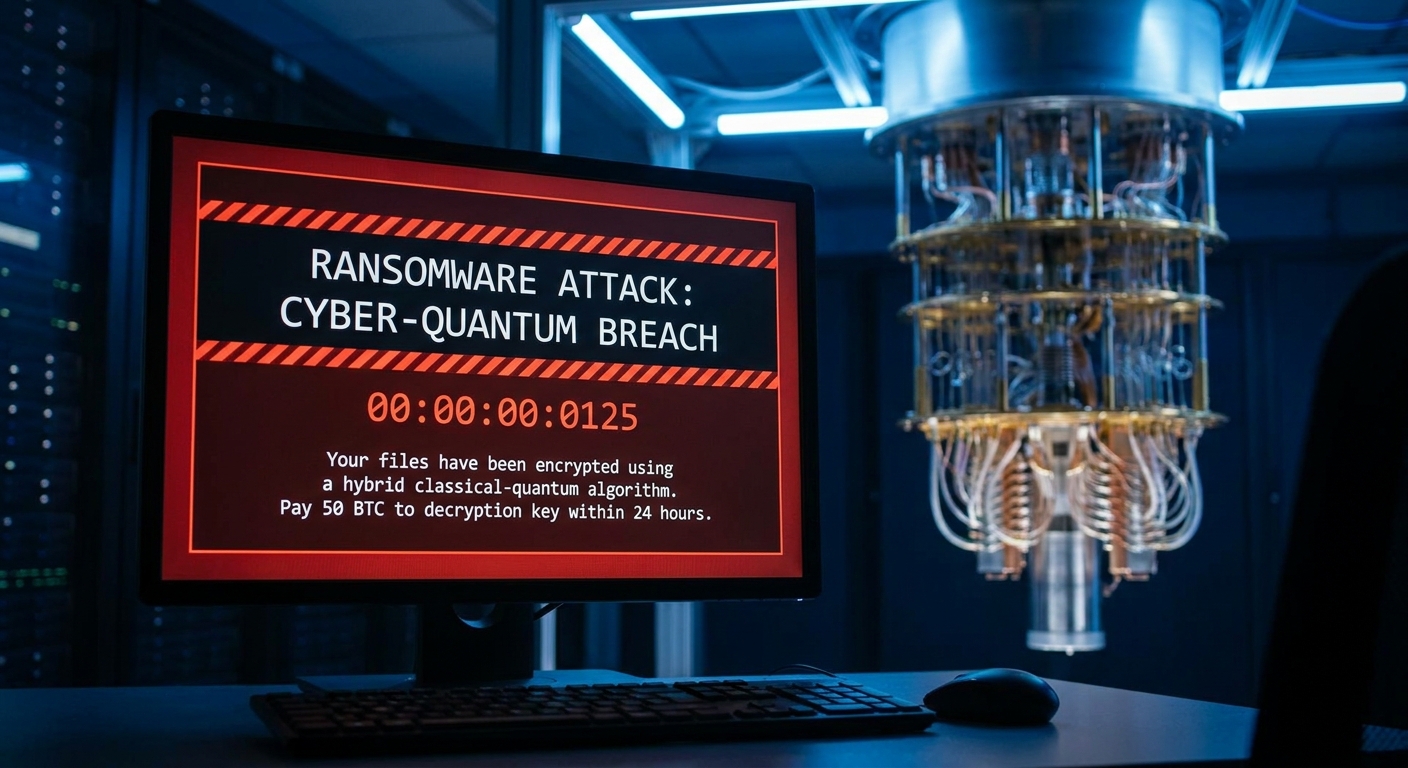
The recent confirmation that a ransomware family has incorporated post-quantum cryptography (PQC) has sent shockwaves through the cybersecurity community. While the use of PQC in ransomware may seem like a trivial matter, it has significant implications for the future of cyber threats. To understand the motivations behind this move, it's essential to delve into the history of ransomware and its evolution over the years.
Historical Context: The Rise of Ransomware
In 2017, the WannaCry ransomware attack brought the world to a standstill, infecting over 200,000 computers in 150 countries. This attack marked a turning point in the history of ransomware, as it demonstrated the potential for widespread disruption and financial gain. Since then, ransomware has become a lucrative business, with attackers demanding millions of dollars in exchange for decryption keys. The use of PQC in ransomware is a natural progression of this trend, as attackers seek to stay ahead of the curve and ensure the longevity of their malicious activities.
Competitive Analysis: The Cat-and-Mouse Game
The incorporation of PQC in ransomware is a significant blow to law enforcement agencies and cybersecurity firms, which have long relied on classical cryptography to combat ransomware attacks. The use of PQC makes it exponentially more difficult for authorities to decrypt files and track down attackers. This development will likely lead to a surge in investment in quantum computing and PQC research, as companies and governments scramble to stay ahead of the threat. The competitive landscape of the cybersecurity industry will undergo a significant shift, with companies that adapt quickly to the new reality emerging as leaders in the field.
Technical Deep Dive: The Mechanics of PQC
PQC is based on mathematical problems that are resistant to attacks by both classical and quantum computers. The most common PQC algorithms, such as lattice-based cryptography and code-based cryptography, rely on the hardness of problems like the shortest vector problem and the decoding problem. The use of PQC in ransomware means that attackers are now using these algorithms to encrypt files, making it virtually impossible for victims to recover their data without the decryption key. The technical implications of PQC in ransomware are far-reaching, and experts predict that it will become a standard feature of future ransomware attacks.
Contrarian Take: The Folly of PQC in Ransomware
Despite the hype surrounding PQC in ransomware, some experts argue that its use is premature and potentially counterproductive. The current lack of quantum computing capabilities means that PQC offers no practical benefits to attackers, and its use may actually hinder their ability to decrypt files and receive payments. Furthermore, the use of PQC may attract unwanted attention from law enforcement agencies and cybersecurity firms, which may lead to a crackdown on ransomware activities. The folly of PQC in ransomware lies in its potential to disrupt the delicate balance of the ransomware ecosystem, leading to unintended consequences for attackers and victims alike.
Market Structure Analysis: The Shifting Landscape of Cybersecurity
The emergence of PQC in ransomware will lead to a significant shift in the market structure of the cybersecurity industry. Companies that specialize in PQC research and development will see a surge in demand for their services, while those that fail to adapt will be left behind. The use of PQC in ransomware will also lead to a increase in investment in quantum computing and PQC research, as governments and companies seek to stay ahead of the threat. The cybersecurity landscape will become increasingly complex, with PQC emerging as a key differentiator between companies that are prepared for the future and those that are not.
Forward-Looking Predictions: The Future of Ransomware
In the coming years, we can expect to see a significant increase in the use of PQC in ransomware attacks. As quantum computing capabilities become more widespread, the use of PQC will become a standard feature of ransomware attacks. The cybersecurity industry will need to adapt quickly to this new reality, with companies investing heavily in PQC research and development. The future of ransomware will be shaped by the interplay between PQC, quantum computing, and classical cryptography, leading to a complex and ever-evolving landscape of cyber threats. By 2028, we predict that PQC will be used in over 50% of ransomware attacks, making it a critical component of the cybersecurity industry.