

World Labs Revolutionizes Robot Training
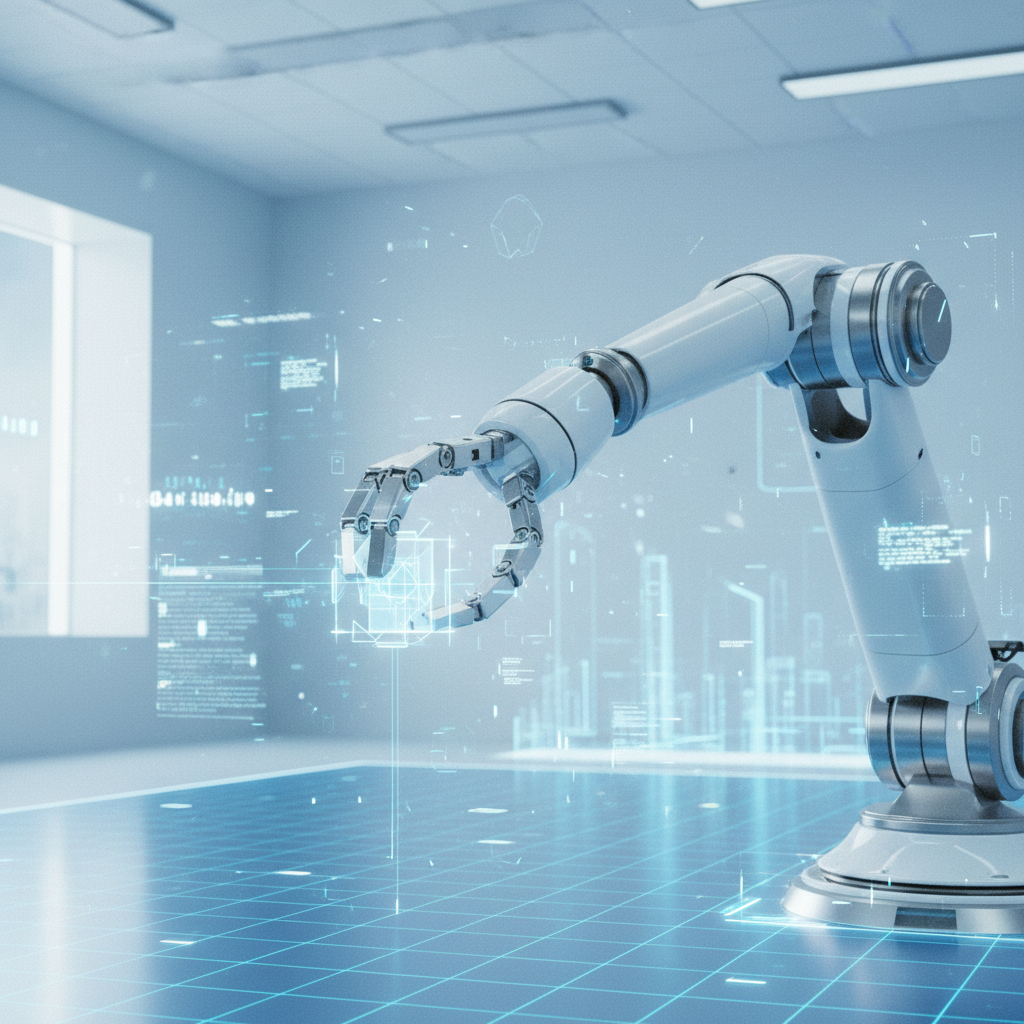
Illustration, not documentary evidence of the event.
The robotics industry has long been hindered by the need for extensive real-world training, which can be time-consuming, expensive, and often dangerous. However, World Labs, founded by AI pioneer Fei-Fei Li, has made a groundbreaking breakthrough with its simulation engine that can generate thousands of controlled variations of a single real-world robot task. This innovation has the potential to revolutionize the way robots are trained, enabling them to learn and adapt at an unprecedented pace.
Technical Deep Dive
World Labs' simulation engine uses advanced algorithms to create a vast array of virtual scenarios, each with its unique set of parameters and conditions. By leveraging this technology, robot controllers can be trained entirely in virtual environments, eliminating the need for physical prototypes and reducing the risk of damage or injury. The engine's ability to generate thousands of variations from a single task enables robots to learn from a diverse range of experiences, making them more resilient and adaptable in real-world situations.
The simulation engine's architecture is built around a modular design, allowing for seamless integration with various robot platforms and control systems. This modularity enables the engine to be easily scaled up or down, depending on the specific requirements of the task or application. Furthermore, the engine's use of advanced protocols such as ROS (Robot Operating System) and APIs like RESTful APIs ensures smooth communication between the simulation environment and the robot controllers.
In terms of performance, the simulation engine has demonstrated impressive capabilities, with trained models running for one hour each on five different robot platforms without human intervention. This level of autonomy and reliability is a significant step forward in the development of AI-powered robots, and it has far-reaching implications for industries such as manufacturing, logistics, and healthcare.
Industry Impact
The introduction of World Labs' simulation engine is set to disrupt the robotics industry in several ways. Firstly, it will significantly reduce the cost and time associated with robot training, making it more accessible to a wider range of companies and applications. Secondly, the engine's ability to generate thousands of virtual scenarios will enable robots to learn from a vast array of experiences, making them more versatile and effective in real-world situations. robot training offers additional context on this topic.
The impact of this technology will be felt across various sectors, from manufacturing and logistics to healthcare and education. For instance, in manufacturing, robots trained using World Labs' simulation engine can be deployed to perform complex tasks such as assembly, welding, and quality control. In healthcare, robots can be trained to assist with patient care, rehabilitation, and surgery, improving outcomes and reducing recovery times.
However, the success of this technology also depends on the ability of the simulation engine to accurately model real-world scenarios. The engine's performance in more complex everyday situations remains to be seen, and it will be crucial to test and validate its capabilities in a variety of applications and environments.
Competitive Landscape
World Labs' simulation engine is poised to challenge the dominance of traditional robot training methods, which often rely on physical prototypes and extensive real-world testing. The company's innovative approach will likely attract significant attention from industry leaders, researchers, and investors, and it may prompt other companies to develop similar technologies. robot training offers additional context on this topic. For related analysis, see Stripe's OpenRouter Acquisition: Unlocking AI-Powered Payments. For related analysis, see DeepSeek's V4 Flash Stumbles on Real-World Tasks.
Rivals such as NVIDIA, Google, and Amazon will need to respond to World Labs' breakthrough, potentially by developing their own simulation engines or acquiring companies with similar technologies. The emergence of this new technology will also create opportunities for collaboration and partnership, as companies seek to integrate World Labs' simulation engine with their existing products and services. Our AI analysis explores this further.
Frequently Asked Questions
How does World Labs' simulation engine compare to other robot training methods?
World Labs' simulation engine is a significant departure from traditional robot training methods, which often rely on physical prototypes and extensive real-world testing. The engine's ability to generate thousands of virtual scenarios enables robots to learn from a diverse range of experiences, making them more resilient and adaptable in real-world situations. robot training offers additional context on this topic.
What are the potential applications of World Labs' simulation engine?
The potential applications of World Labs' simulation engine are vast and varied, spanning industries such as manufacturing, logistics, healthcare, and education. The engine's ability to train robots entirely in virtual environments makes it an attractive solution for companies seeking to deploy robots in complex and dynamic environments.
How will World Labs' simulation engine impact the development of AI-powered robots?
World Labs' simulation engine is set to accelerate the development of AI-powered robots, enabling them to learn and adapt at an unprecedented pace. The engine's ability to generate thousands of virtual scenarios will enable robots to learn from a vast array of experiences, making them more versatile and effective in real-world situations.
What are the challenges and limitations of World Labs' simulation engine?
While World Labs' simulation engine has demonstrated impressive capabilities, there are still challenges and limitations to be addressed. The engine's performance in more complex everyday situations remains to be seen, and it will be crucial to test and validate its capabilities in a variety of applications and environments.
In conclusion, World Labs' simulation engine has the potential to revolutionize the way robots are trained, enabling them to learn and adapt at an unprecedented pace. As the technology continues to evolve and improve, it will be exciting to see the impact it has on the robotics industry and beyond. With its ability to generate thousands of virtual scenarios, World Labs' simulation engine is poised to transform the future of AI development and robot training, and it will be crucial to monitor its progress and development in the years to come. robot training offers additional context on this topic.