

How Caterpillar Uses Mining Automation for AI
AI-assisted analysis. Sourcing and editorial process
Based on reporting by techcrunch.com. Analysis and framing are Seedwire's own.
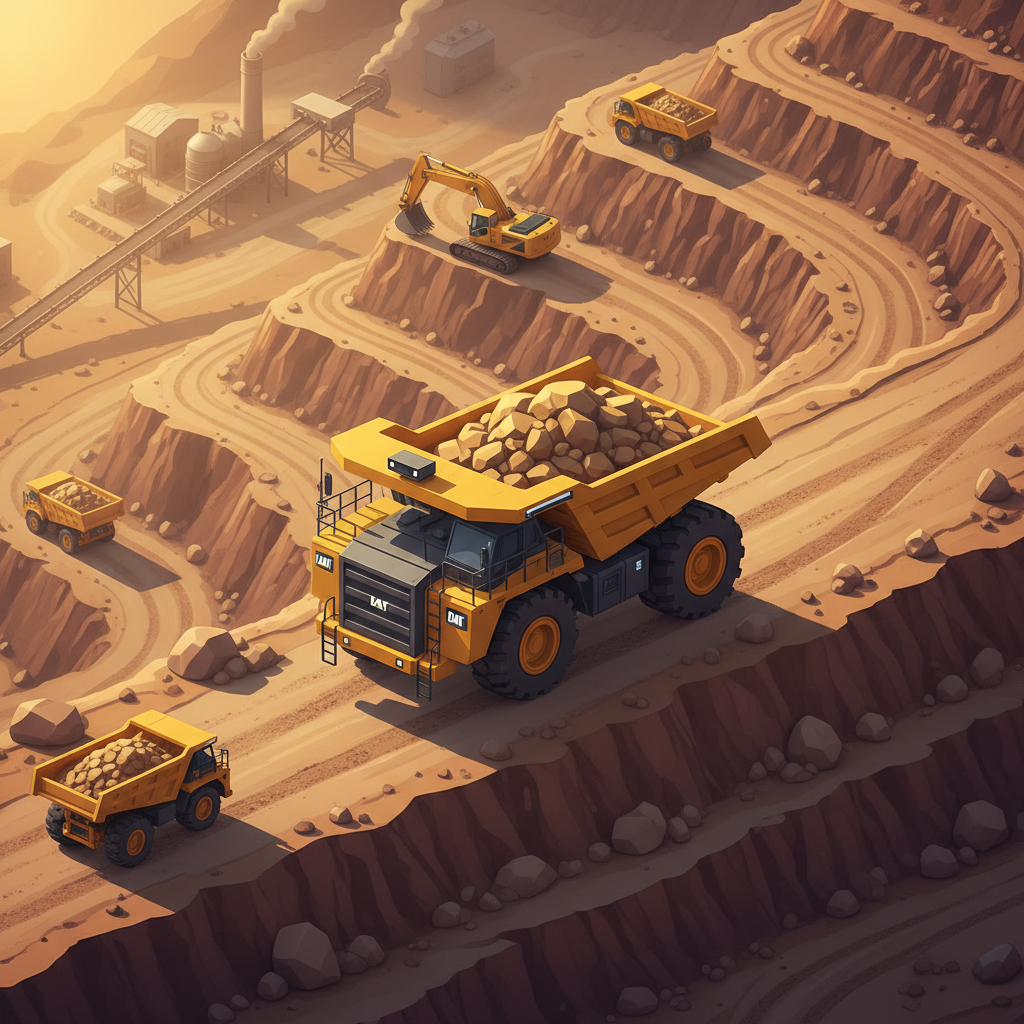
Illustration, not documentary evidence of the event.
Caterpillar is bringing its expertise in automating mining to the deployment of artificial intelligence, as first reported by TechCrunch. The company has spent decades dealing with the challenges of integrating technology into everyday operations in the physical world, and now it's using that experience to deploy AI in industrial settings.
Caterpillar's push into the autonomous space started with mining, where labor shortages and hazardous conditions make automation particularly useful. The company sells automated haul trucks, drilling, underground loaders, dozers, remote-controlled construction equipment, and more. It also offers a software command center, fleet management, and remote terrain intelligence as part of its autonomous toolkit. According to the company's CTO, Jaime Mineart, Caterpillar is now applying AI more broadly, including in tools used by technicians and its own employees.
One example of this is the Cat AI Assistant, which lets field technicians use voice commands to pull up repair procedures, troubleshoot potential problems, and identify parts that may be needed before beginning a repair. The assistant draws on Caterpillar's proprietary data, which spans information generated by its connected machines. Mineart said the company has about 1.6 million connected assets globally and more than 16 petabytes of structured data.
The company is also using AI to power software for scanning sites and generating digital twins in manufacturing to analyze operations. Additionally, Caterpillar is using AI across its enterprise operations, as well as for software development. Mineart said the company uses AI agents to modernize legacy code, generate and test new software, and identify defects earlier.
However, Mineart noted that building the technology is only part of the challenge. Deploying an autonomous machine is not the same as transforming a site to use AI, and companies must also rethink how people work alongside the technology and how existing processes need to change. To address this, Caterpillar is leaning on experienced operators to help train AI systems, leveraging institutional knowledge built over decades.
The company plans to spend $100 million over the next five years to train its workforce in AI, autonomy, and robotics. This investment is likely being put towards helping the company make the most of the broader boom in AI infrastructure, which is already helping its top-line. Caterpillar's quarterly revenue reached an all-time high of $20.5 billion in the second quarter, helped by strong demand for power-generation equipment used in data centers.
The more interesting question is how Caterpillar's experience in automating mining will translate to other industrial settings. The company's ability to integrate AI into its operations and leverage its proprietary data could be a major advantage in this space. As the demand for AI infrastructure continues to grow, Caterpillar is well-positioned to benefit from this trend. Related: AI deployment.